More Than a Flag: What Independence Means 45 Years On
As Antigua and Barbuda prepares to celebrate 45 years of Independence, its national flag and anthem offer more than symbols of pride. They tell a story of struggle, freedom and the continuing responsibility of nationhood.
By Zoë Carlton
Every November, Antigua and Barbuda turns red, blue, black, white and yellow.
Flags appear on buildings and cars. Schools celebrate. Music, food, parades and national dress fill the weeks around Independence Day. This year carries particular significance: November 1 marks 45 years since Antigua and Barbuda became an independent nation.
But look closely at the flag flying above those celebrations and there is a much longer story in it.
It is a story of Africa and slavery, hope and freedom, sea and sand — and, above everything, of a new beginning.
A flag designed at home
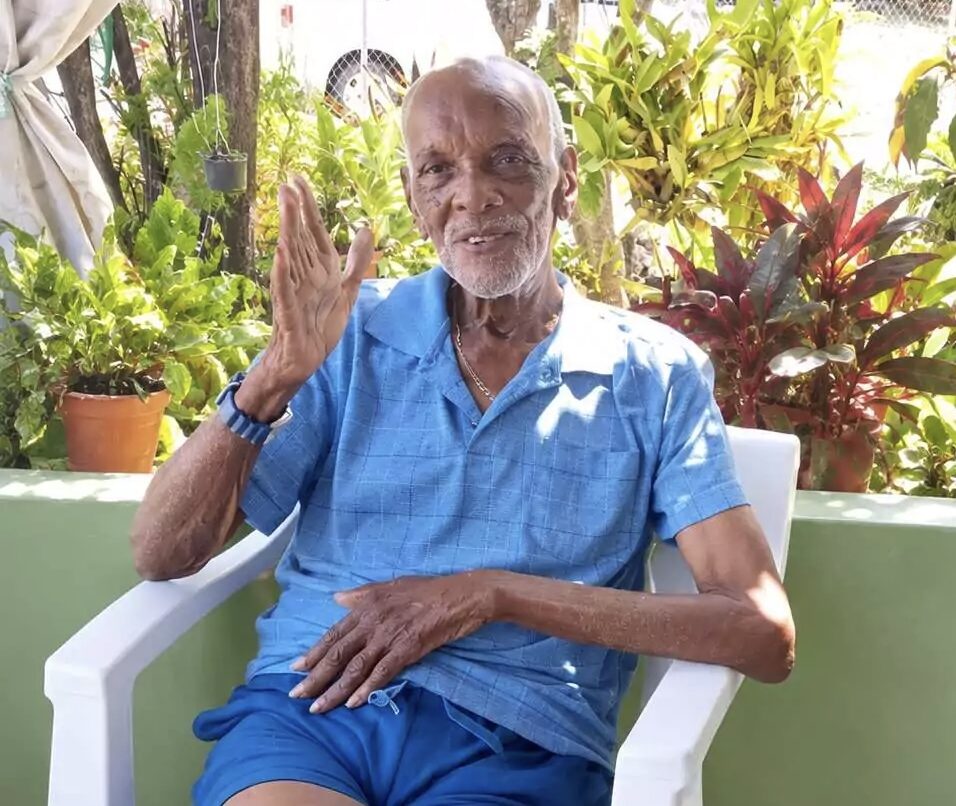
Antigua and Barbuda’s flag was not designed in London, nor commissioned from some distant expert in heraldry. It came from Antiguan artist and teacher, Reginald Samuel — the story of its creation is almost as remarkable as the flag itself.
In 1966, as Antigua prepared for Associated Statehood, a national competition was launched to find a flag for the new era. More than 600 designs were submitted. Samuel nearly wasn’t among them.
According to an account credited to the Museum of Antigua & Barbuda and the Dockyard Museum, he entered at the very last minute, producing his design in only about half an hour. It won.
For his winning entry Samuel received $500 — and Antigua and Barbuda received one of the Caribbean’s most distinctive national flags.
First raised officially on February 27, 1967, the flag remained unchanged when Antigua and Barbuda achieved full Independence fourteen years later. Perhaps that spontaneity is part of its success. There is nothing fussy about the design. It is bold, immediately recognisable and packed with meaning; and nothing in it is accidental.
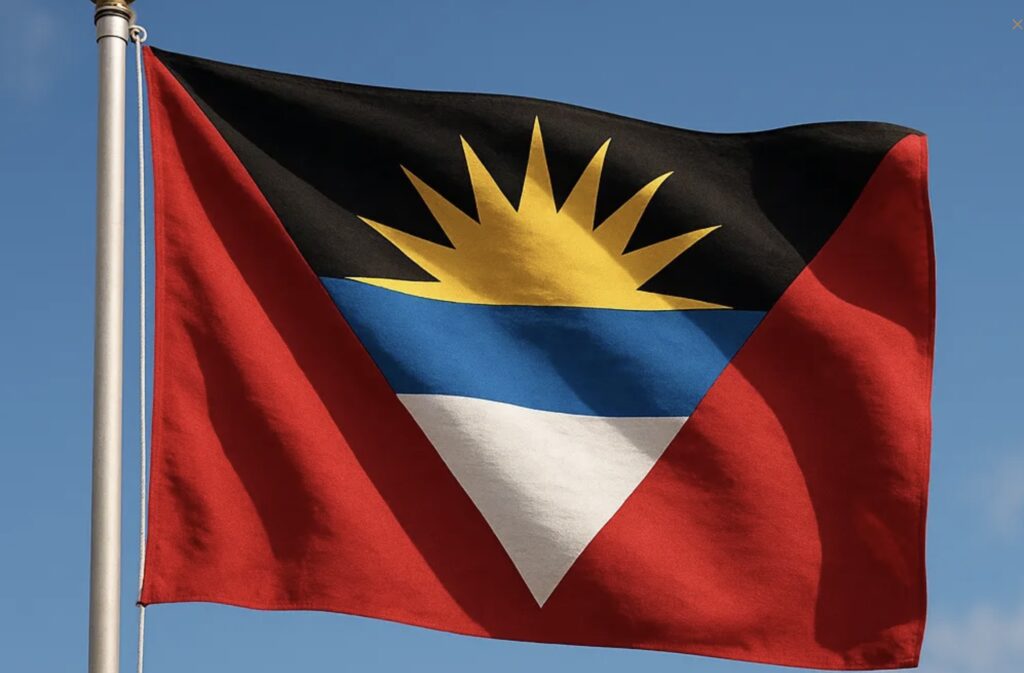
The seven-pointed golden sun represents the dawn of a new era.
Black represents the soil and African heritage of the people. Blue represents hope. Red carries a more powerful historical meaning: the lifeblood of enslaved forefathers, as well as the dynamism of the people.
Yellow, blue and white also create something instantly recognisable to anyone who knows these islands: sun, sea and sand.
Then there is the shape of the whole design.
The red sides form a great V.
Its meaning is wonderfully simple: Victory at last.
It is difficult to imagine three words carrying much more history.
For centuries, Antigua’s prosperity had been built largely upon sugar and the forced labour of enslaved Africans. Even the great Georgian Dockyard we celebrate today could not have been built and operated without the labour and skills of generations of enslaved people.
Emancipation came in 1834. Political independence took another 147 years.
So when that V says Victory at last, it reaches considerably further back than 1981.
A nation finds its voice
The national anthem tells much the same story, but in words.
Fair Antigua, We Salute Thee was first adopted in 1967. Its lyrics were written by Novelle Hamilton Richards and its music composed by Walter Garnet Picart Chambers. The opening verse was subsequently revised for Independence in 1981, reflecting the emergence of Antigua and Barbuda as a fully sovereign nation.
It is easy for an anthem to become so familiar that we stop listening to what it actually says.
Listen again and Antigua and Barbuda’s is striking.
This is not principally a song about military glory, rulers or past victories. It is about building a country.
The anthem is a pledge of allegiance — to one another, to the country itself and ultimately, to God. It calls upon Antiguans and Barbudans to stand together, serve their nation and seek divine guidance in building a better future. Independence is not simply something to celebrate, but a responsibility shared by all.
And tucked into that verse is a phrase every Antiguan and Barbudan knows:
“Each endeavouring, all achieving.”
Those words are also the national motto.
That matters.
Independence, in the anthem, is not presented as something completed by lowering one flag and raising another. Freedom creates responsibilities of its own. A country has to be built, protected and continually improved by the people who inherit it.
Midnight, 1981
Fourteen years after the flag and anthem were adopted, the moment they anticipated finally arrived.
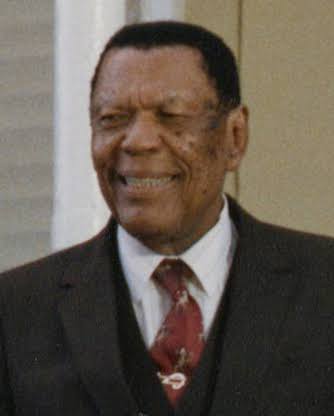
On November 1, 1981, Antigua and Barbuda became fully independent from Britain. The new Constitution came into effect and Vere Cornwall Bird became the country’s first Prime Minister. Antigua and Barbuda remained within the Commonwealth as a constitutional monarchy.
At midnight, at the Antigua Recreation Ground, the Union Jack was lowered and Antigua and Barbuda’s own flag was raised.
Princess Margaret, representing Queen Elizabeth II, welcomed the world’s newest nation into the Commonwealth.
One can imagine that golden sun looking particularly appropriate that night.
The dawn of a new era had ceased to be merely symbolic.
It had arrived.
Masters of our own destiny
The speech Vere Cornwall Bird delivered that night is worth returning to, because amid all the celebration he made an important distinction. Independence was an achievement, but it was not an ending.
“My people, we are free this night,” he told the new nation. “But freedom cannot exist without responsibility.”
It is difficult to find a clearer statement of what Independence meant.
The remaining constitutional dependence on Britain had ended. Antigua and Barbuda was now, in Bird’s words, “masters of our own destiny.” But with that freedom came something considerably less ceremonial: responsibility for what happened next.
“The full burden of our freedom now rests squarely upon our shoulders,” he said.
There could be no assumption that independence itself would deliver prosperity. Bird spoke instead of work, discipline, dedication and productivity. He reminded the young people of the country that the benefits of Independence were their inheritance, won through the struggle and suffering of generations before them — but that they must cherish that inheritance through action.
“The ultimate safeguard of independence is productivity,” he declared.
And there was another part of Bird’s speech that deserves remembering.
He did not use Independence to call for the rejection of Britain or the erasure of a complicated and often painful shared history. He acknowledged that Antigua had been a British colony and that its people had been exploited. But he also argued that Independence ended the formal colonial relationship, not every connection between the two countries.
“This end marks a new beginning in our relations with Britain,” he said.
Then came perhaps one of the most striking sentiments of the night: Antigua and Barbuda would “cast away acrimony over the past” and embrace the British people as “our allies and friends of the future.”
It was a forward-looking definition of independence: remember the past, certainly, but do not remain imprisoned by it. Freedom meant having the confidence to determine what came next.
Bird ended not with a promise that independence would make life easy, but with a challenge. There would be no “manna from heaven”. The new country would have to work together, in its national interest, if it was to sustain its independence with dignity and self-respect.
“Let us go forth and be productive,” he told the nation. “Let us multiply the fruits of independence.”
It was an appropriate message for a country taking full responsibility for its own future.
And it is no less relevant 45 years later.
Forty-five years later
Much changes in 45 years.
Those born in the year of Independence are now turning 45. Children who grew up beneath the new flag have children — and grandchildren — of their own. Antigua and Barbuda has taken its place internationally as a sovereign state while confronting the particular challenges that come with being a small island nation.
But the question Bird posed that night has not aged at all: what do we do with the freedom we inherited?
This year’s official Independence theme is “Renaissance: Rooted in Pride, Bounded by Prosperity for All.” The 45th anniversary programme is intended not simply as a celebration of the past but as an opportunity to think about national renewal and the country’s approach to its 50th anniversary.
Perhaps that is where the old symbols become most relevant.
Because neither the flag nor the anthem asks us merely to admire what has already been achieved. Nor, on the night Independence finally arrived, did the country’s first Prime Minister.
The sun is rising, not setting.
The anthem speaks of building, striving and seeking. The flag speaks of hope. Bird spoke of responsibility, work and what a free people must do with their freedom. Even the great V — Victory at last — sits above colours that deliberately remember the people whose lives and labour came before.
They are symbols of pride, certainly.
But they are also instructions.
The flag still flies
On November 1 2026, flags will fly across Antigua and Barbuda.
The flag heralded the dawn of a new era. The anthem called upon a people to build a nation. And on the night that nation finally became fully its own, V. C. Bird reminded its people that freedom brought responsibility.
Independence was never meant to be the end of the story.
On November 1, 1981, Antigua and Barbuda took its future into its own hands; forty-five years later, that responsibility remains.
V C Bird quotations from “V CBird: When Power Failed to Corrupt,” by Lionel Hurst
Related Posts
Reimagining the Antigua Yacht Club
Rashid Walker: A Voice Raised in Praise