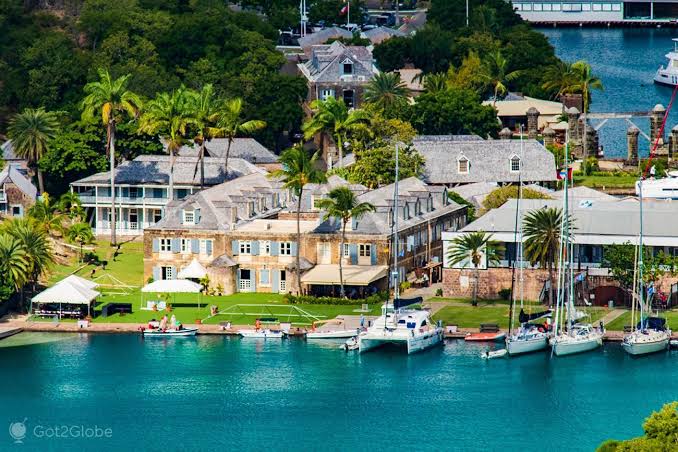
Reimagining the Antigua Yacht Club
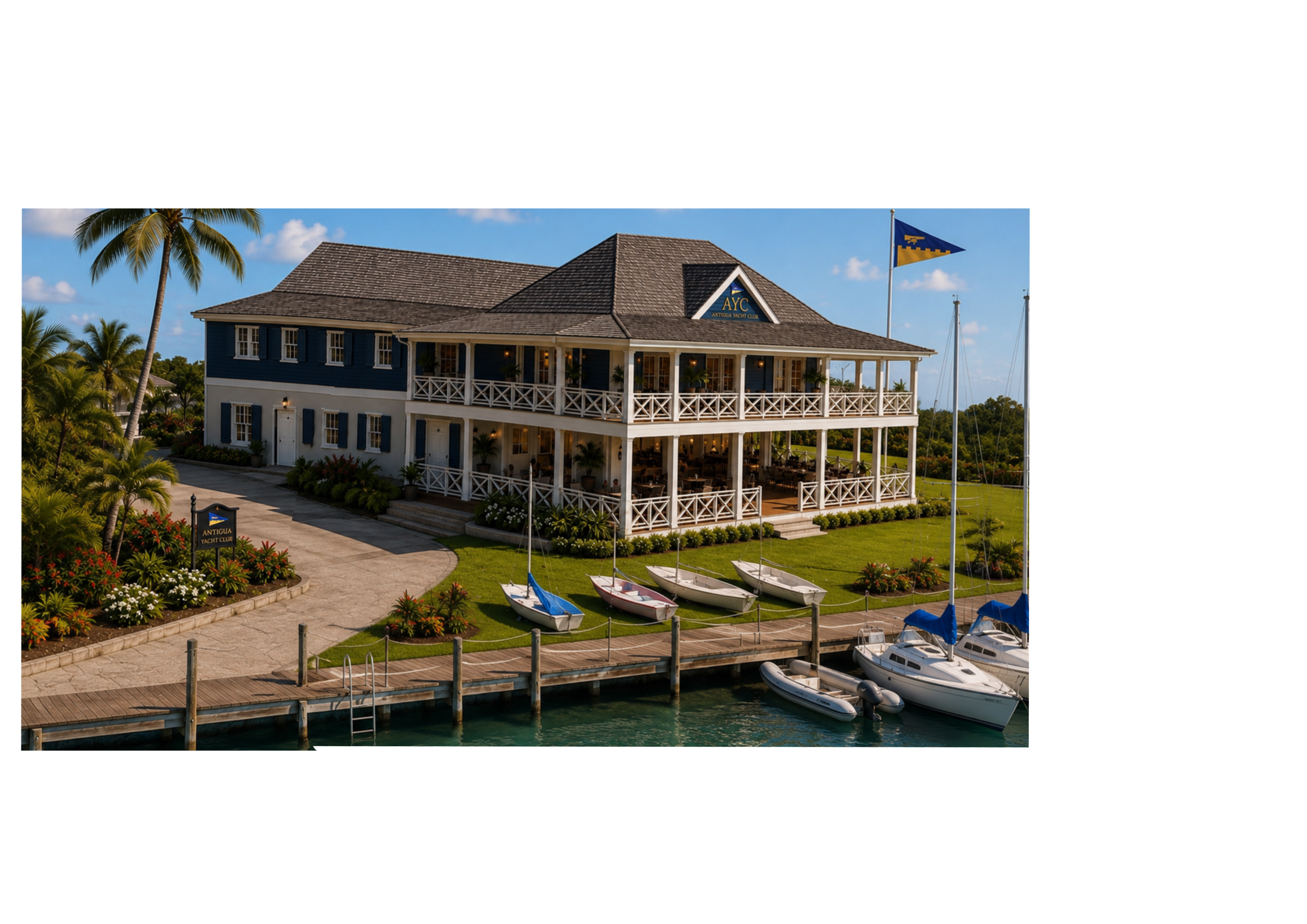
Antigua Yacht Club has been part of English Harbour and International Sailing for generations, but its ageing clubhouse is showing every one of those years. With the building increasingly in need of serious attention, a new proposal has now been put forward — one that could give the Club a new lease of life while preserving its place at the heart of Antigua’s sailing community.
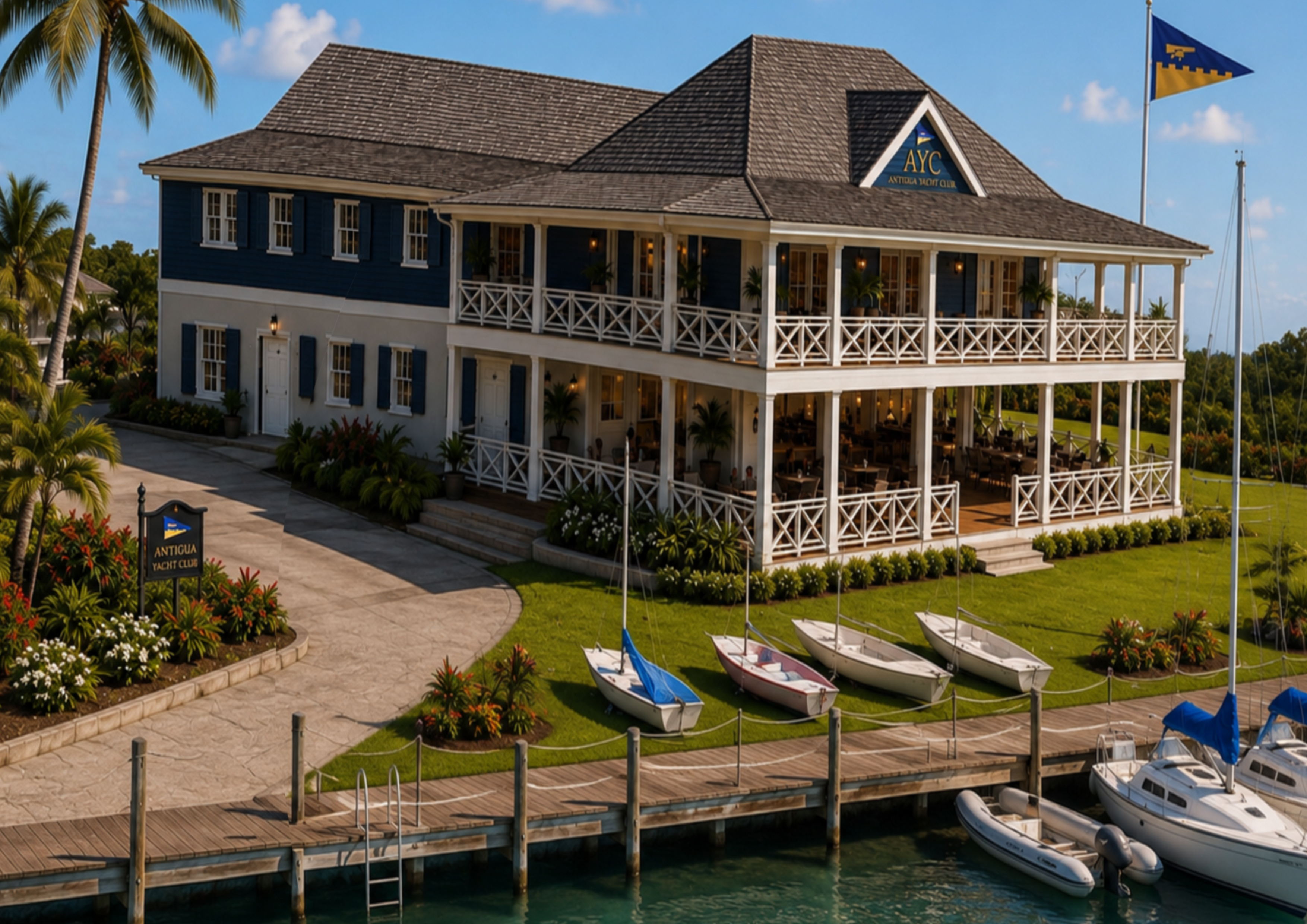
Artist’s impression of concept design
Reimagining the Antigua Yacht Club
The building may be creaking and the paint fading, but the spirit of the Antigua Yacht Club is very much alive — and judging by the mood at the Extraordinary General Meeting held in April, perhaps ready to enter an exciting new chapter.
With Commodore Dr. Clarence Pilgrim unfortunately called away, it was left to Vice Commodore Richard Fear to present an ambitious vision for the modernisation of the club, alongside concept drawings for a revitalised clubhouse created by local architect Andrew Goodenough. The presentation sparked lively and enthusiastic discussion, with many members praising the energy, commitment and hard work already invested in the project.
A noticeable sense of optimism filled the room — a feeling many members said had been absent for far too long.
Following the presentation, the Vice Commodore called for an informal show of hands to support the concept and approve the Antigua Yacht Club Board continuing to develop the plans in consultation with members. The response was overwhelmingly positive, with strong support for moving the ideas forward into the next stage of discussion and refinement. Members were told that further workshops and consultations would follow, keeping the wider club community closely involved in shaping the future vision. These were also expected to include consultation with the National Parks Authority and other key stakeholders.
Founded in 1967 as the English Harbour Yacht Club, and operating from its current clubhouse since 1969, the Antigua Yacht Club has become one of the Caribbean’s most recognised sailing institutions. Over the decades it has helped place Antigua firmly on the global sailing map through internationally respected events including Antigua Sailing Week, the RORC Caribbean 600 and the Antigua Classic Yacht Regatta.
Yet the success of the club has inevitably placed increasing strain on facilities that were never designed for today’s level of activity. Busy restaurants and heavy year-round use have left their mark on the ageing structure. While the club remains full of character and history, there is broad recognition that investment and renewal are needed to secure its future for generations to come.
The emerging plans aimed not simply to repair the building, but to reimagine the waterfront experience entirely. Many international sailors and visitors who love Antigua, its racing calendar and its reputation as one of the Caribbean’s premier sailing destinations have long felt that the current clubhouse no longer reflects the island’s standing on the world sailing stage. While rich in history and character, the building itself has reached a point where ongoing patchwork repairs are no longer a realistic long-term solution. Decades of heavy use, exposure to the marine environment and the limitations of a structure built for a very different era mean that substantial renewal is now widely seen as essential.
Over time, the facility has evolved more into a busy restaurant base than the dynamic yacht club experience many visitors expect when arriving at one of the world’s premier sailing destinations. The proposed redevelopment sought to restore that balance — creating a true clubhouse and social hub that better reflects Antigua’s international reputation for sailing excellence.
Importantly, some of the proposed redevelopment would build upon the club’s existing foundations, potentially allowing significant work to take place during quieter off-season periods with minimal disruption to members and visitors. At the April meeting, the hope was expressed that, with fair winds and a following sea, the new clubhouse could be in place for the 2029 sailing season.
Importantly, some of the proposed redevelopment would build upon the club’s existing foundations, potentially allowing significant work to take place during quieter off-season periods with minimal disruption to members and visitors. At the April meeting, the hope was expressed that, with fair winds and a following sea, the new clubhouse could be in place for the 2029 sailing season.
Since then, the foundations for taking the concept further have not disappeared. Although architect Andrew Goodenough is retiring, he has offered to continue providing, still gratis, advice and support as the project develops. Vice Commodore Richard Fear has also continued to explore ways of moving the proposal forward, including identifying possible avenues for funding. Encouragement has come from beyond Antigua too: the RORC has expressed enthusiasm for the concept and indicated that an improved clubhouse would be welcomed by the many international sailors who come to Antigua.
But the vision extends beyond buildings alone.
Members and organisers alike recognise that the future of the Antigua Yacht Club also depends on continuing to nurture young Antiguan sailors, expanding community involvement and strengthening the club’s role as a vibrant social and cultural hub. From concerts and live performances such as the piano boat concert and Island Girls performance, to exhibitions and public events, there is growing enthusiasm for creating a waterfront destination that welcomes the wider community while still preserving the club’s proud sailing heritage.
That balance — between tradition and progress, exclusivity and openness — may ultimately define the club’s next era.
For many attending the April meeting, however, the most encouraging sign was something less tangible: the return of momentum, conversation and a belief that the Antigua Yacht Club’s best days might still lie ahead. Five months later, the enthusiasm remains, professional support is still available and possible routes towards funding have begun to be identified. The opportunity, in other words, is still there. What is needed now is for the momentum generated in April to be carried forward.
From 1969 to 2029, a generational change is long overdue.
Related Posts
Rashid Walker: A Voice Raised in Praise

Slates: Fine Dining with Flair