Ten Years On: Protecting the Dockyard for the Next Generation
Part 3
Ten years after Nelson’s Dockyard became Antigua and Barbuda’s first UNESCO World Heritage Site, the question is no longer simply how to preserve what has survived.
It is how to protect it while allowing Antigua to grow around it.
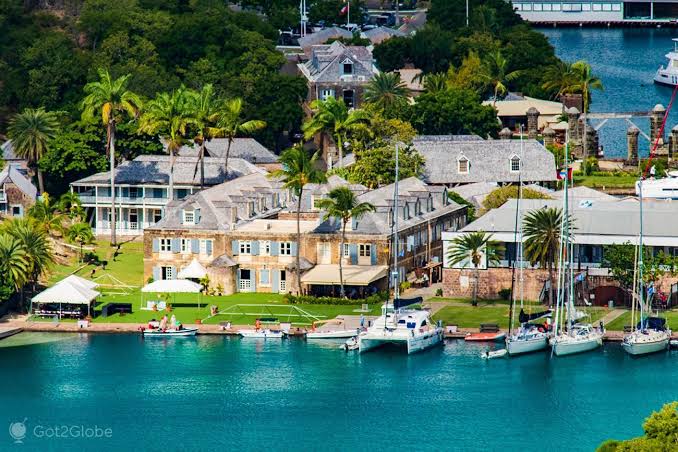
A joint UNESCO/ICOMOS advisory mission in 2024 found increasing development pressure within the World Heritage property and its buffer zone, particularly from tourism, hotels and holiday homes.
UNESCO does not say development must stop. It says development must not destroy the qualities that made the place worthy of World Heritage status in the first place.
Archaeologist Dr Reg Murphy agrees.
“Development and heritage do not necessarily have to be enemies,” he says. “If the site is properly managed and the controls are respected, they can work together.”
Perhaps the clearest sign of how far the argument has travelled came only last year.
Antigua and Barbuda’s Cultural Heritage (Protection) Act 2025 placed the National Parks Authority at the centre of heritage protection nationwide, with responsibility not simply for historic buildings but for archaeological sites, human remains, documents and underwater heritage.
It also requires an inventory of the country’s heritage and makes research, public access to knowledge and education part of the job.
For historian Desley Gardner, the significance is practical as well as symbolic.
She hopes the next decade will see the Act fully implemented, more heritage sites formally declared and properly managed, and stronger regulatory protection for archaeology, including underwater cultural heritage.
Ten years after UNESCO recognised the Dockyard, the philosophy behind its protection is beginning to extend far beyond its gates.
There is another threat which no legislation can remove.
The same coast and geography which made English Harbour such a valuable naval base three centuries ago leave parts of its historic landscape vulnerable to climate change and increasingly severe weather.
Gardner has already seen storm damage to ruins in the hills. And she makes the practical point that after a devastating hurricane, nobody’s first priority will be an eighteenth-century wall.
People need safety, shelter and water.
Which means plans to protect heritage have to be made before disaster strikes.
“Climate change is not on its way,” Gardner says. “It’s already here.”
For the next decade, she wants disaster preparedness to become routine rather than something hurriedly considered as each hurricane season approaches.
But both Gardner and Murphy return repeatedly to a challenge which has nothing to do with stone walls.
What happens to all the knowledge now being uncovered?
“It isn’t enough simply to keep digging,” Murphy says. “We need analysis. We need research. And, most importantly, we need publication.”
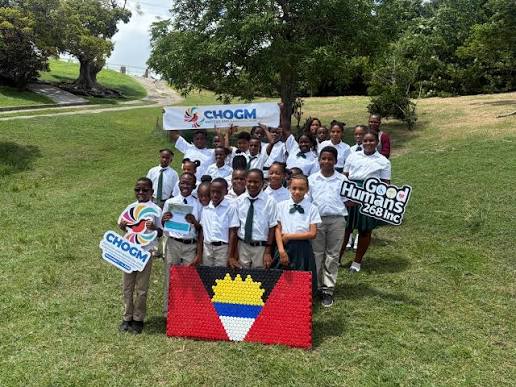
Gardner wants the history being uncovered at English Harbour to become part of Antiguan education, from primary school through to tertiary level.
She wants better interpretation throughout the National Park, so that someone walking a trail understands not simply that a ruin is old, but what happened there and how it fitted into the wider landscape.
And she wants young Antiguans to see heritage itself differently.
The field does not only need archaeologists digging in the dirt. It needs GIS specialists, drone pilots, botanists, scientists, architects, conservators, lawyers and policy specialists.
Heritage, she argues, can be something young Antiguans study, contribute to — and make a living from.
“We don’t want you digging in the archives and you can’t feed yourself,” she says.
Last year, as Antigua marked 300 years since the formal establishment of the naval base, Parks Commissioner Ann Marie Martin described the tricentennial as “a celebration of the communities who have preserved and enriched its legacy”.
She called for the Dockyard to remain “a living symbol of our history, culture, and future potential”.
That phrase — a living symbol — may be the key.
The remarkable thing about Nelson’s Dockyard is not that Antigua has preserved an eighteenth-century naval base under glass.
It hasn’t.
It has taken a place built for war, empire and the sugar economy, reclaimed it, restored it and made it useful again.
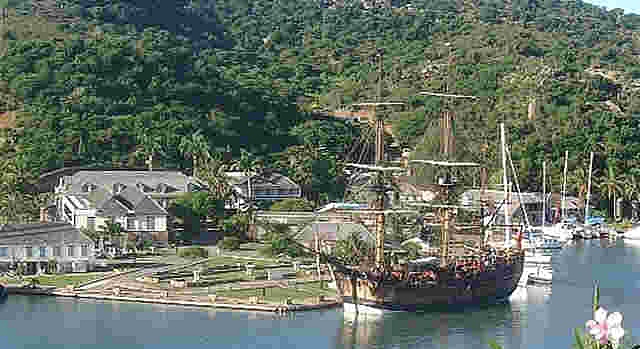
Ships still enter through the same narrow harbour mouth. People still work in the old buildings. Archaeologists are still finding stories beneath the ground. Antiguan masons are still working the stone.
And names are returning to the story.
Billy. Caramatee Quamono. Scipio. Lydia Burke. Jane Lake. Mary Vermont.
People who once existed largely as categories — slaves, labourers, soldiers, dependants — are beginning to emerge as individuals.
That may be the most profound change of the UNESCO decade.
The world recognised an extraordinary surviving naval complex in 2016. Antigua has spent much of the ten years since discovering more fully whose world it contained.
“The more research we do, the more complicated — and more interesting — the history becomes,” Murphy says.
The next challenge may be the most important of all: making sure that knowledge does not remain in archaeological reports and academic journals.
“It has to reach Antiguans,” Murphy says. “It has to belong to Antigua.”
UNESCO recognised the Dockyard because its importance extended beyond Antigua.
Ten years later, perhaps the more interesting achievement is that Antigua is discovering just how completely the Dockyard belongs to Antigua.
Related Posts
Rashid Walker: A Voice Raised in Praise

Slates: Fine Dining with Flair