Ten Years On: A Much Bigger Dockyard
Part 2
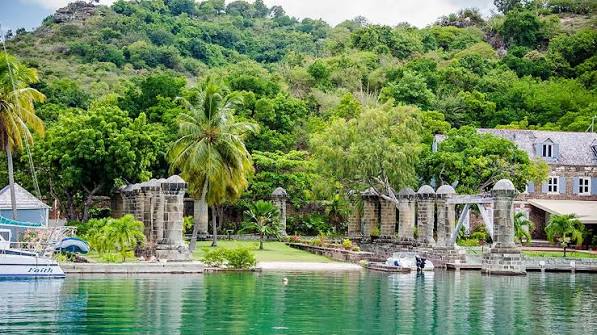
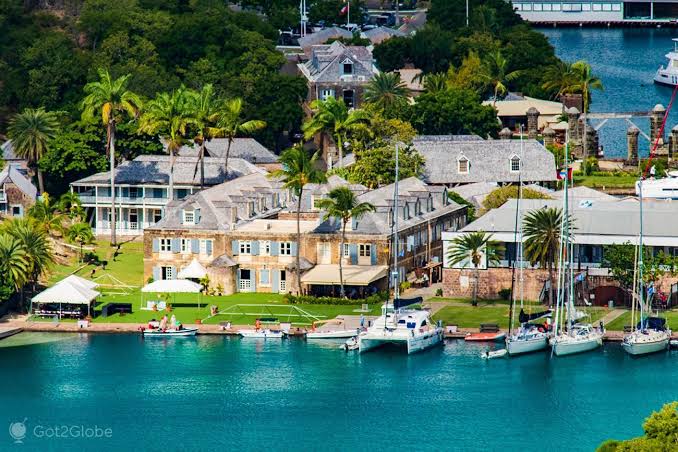
For generations, Nelson’s Dockyard itself was the star of the show: the restored Georgian buildings beside the water, the yachts tied up alongside them and the unmistakable setting of English Harbour.
But when UNESCO placed the Antigua Naval Dockyard and Related Archaeological Sites on the World Heritage List in 2016, it recognised something much larger.
This was not simply a group of historic buildings. It was a cultural landscape.
And during the decade since, research has increasingly revealed how that landscape functioned as a whole.
The military positions at Shirley Heights, Middle Ground and the Blockhouse, the settlements around them and the systems built to provide water were all part of the same operation.
Excavation at the Blockhouse has even uncovered a previously unknown underground drainage system directing rainwater into a cistern — a reminder that Antigua’s centuries-old struggle with drought and water collection was critical to naval operations too.
Researchers are also asking more ordinary questions.
The Dockyard was never attacked. So what did all those soldiers actually do between wars and alarms? How did they spend their days? How much contact was there between the military communities in the hills and English Harbour below?
Here, oral history becomes important.
Historian Desley Gardner recalls the late Alice Edwards passing on stories about soldiers coming down from the hills in the afternoons, interacting with people in the village and returning to their posts.
Because stories survived through generations of English Harbour families, they can sometimes provide something archaeology and official records cannot: a glimpse of everyday life.
The Dockyard is becoming less an isolated British naval installation and more a place populated by people who worked, traded, married, worshipped, quarrelled, raised families and became part of Antigua.
World Heritage status itself did not arrive with an enormous cheque.
“UNESCO doesn’t simply hand you large amounts of money,” archaeologist Dr Reg Murphy says.
What it brought was international recognition, access to expertise and training, and an obligation to conserve the qualities for which the site had been recognised.
Murphy regards training as one of the most important gains of the UNESCO decade.
Antiguans have developed specialist skills in traditional masonry, lime and historic-building conservation, while international expertise has helped raise restoration standards.
That can be seen at the Blockhouse, where Antiguan stonemasons have been stabilising the 200-year-old Officers’ Quarters and reinstating damaged arches using traditional techniques and locally sourced volcanic stone.
There is something rather satisfying about that.
A World Heritage Site built through extraordinary Caribbean craftsmanship is being preserved through Caribbean craftsmanship.
“Heritage isn’t just about preserving stones,” Murphy says. “It is about preserving skills.”
Nelson’s Dockyard also presents UNESCO with an unusual challenge because it is emphatically not preserved under glass.
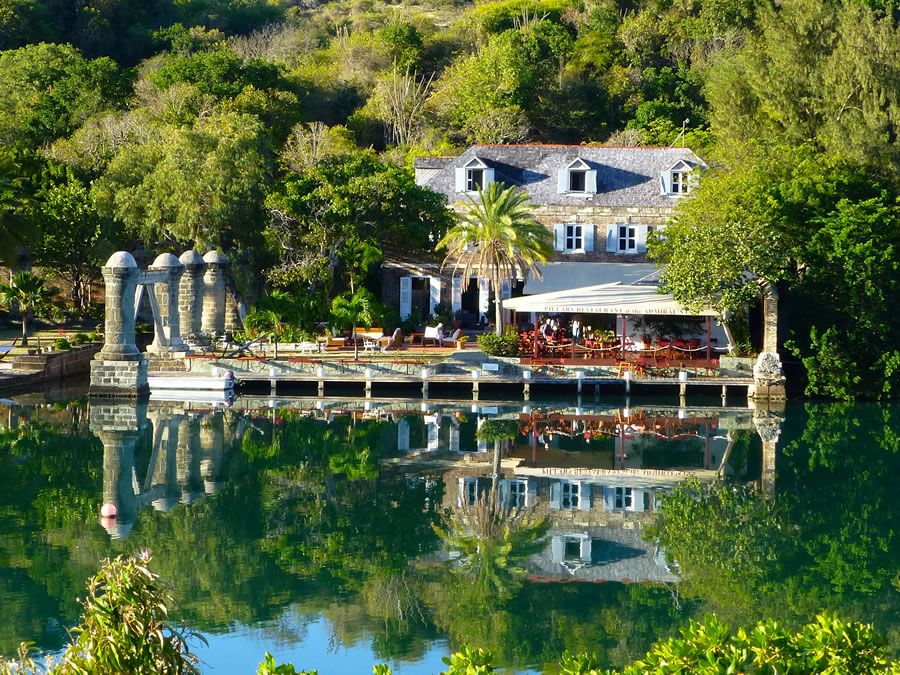
Boats still tie up. Restaurants and hotels operate in historic buildings. Regattas, weddings and community events take place there. People work, live and do business within the wider National Park.
Keeping the Dockyard alive is part of its success.
Controlling what that life does to it is considerably harder.
But perhaps that tension is also what makes the site unusual. It survives not simply because Antigua restored an eighteenth-century naval base, but because the country found a new use for it.
Ships still enter through the same narrow harbour mouth. Craftsmen still work on the historic buildings. Visitors walk through spaces that remain part of the life of English Harbour rather than simply remnants of its past.
Ten years after UNESCO recognition, the Dockyard is understood as something much bigger than the familiar buildings beside the water.
It is a landscape, a living community and a network of skills, stories and places stretching far into the hills around it.
And the more of that landscape Antigua uncovers, the larger the Dockyard becomes.
Related Posts
Rashid Walker: A Voice Raised in Praise

Slates: Fine Dining with Flair