Gloucester: A Roman Medieval Odyssey
A visit to an unexpected English city reveals nearly 2,000 years of history — much of it hidden in plain sight. Zoë Carlton discovers why Gloucester, from its Roman walls to its medieval streets, is one of England’s most overlooked historic gems.
Gloucester is not an obvious city.
It is certainly not somewhere you would choose for a day’s serious shopping. There is a city centre, of course, and Gloucester Quays has brought outlet shopping, restaurants and new life to the old warehouses and canal basin. The National Waterways Museum is there too, in a part of the city which has managed to reinvent itself without completely erasing what came before.
But come for the history, and Gloucester is something else entirely.
In fact, it is difficult to understand quite why a city with almost 2,000 years of history, extraordinary Roman remains, some of the finest medieval buildings in England and one of the country’s great cathedrals is so often overlooked.
Perhaps part of the problem is that Gloucester does not present itself neatly.
Bath announces itself. York surrounds you with its walls.
Gloucester makes you look.
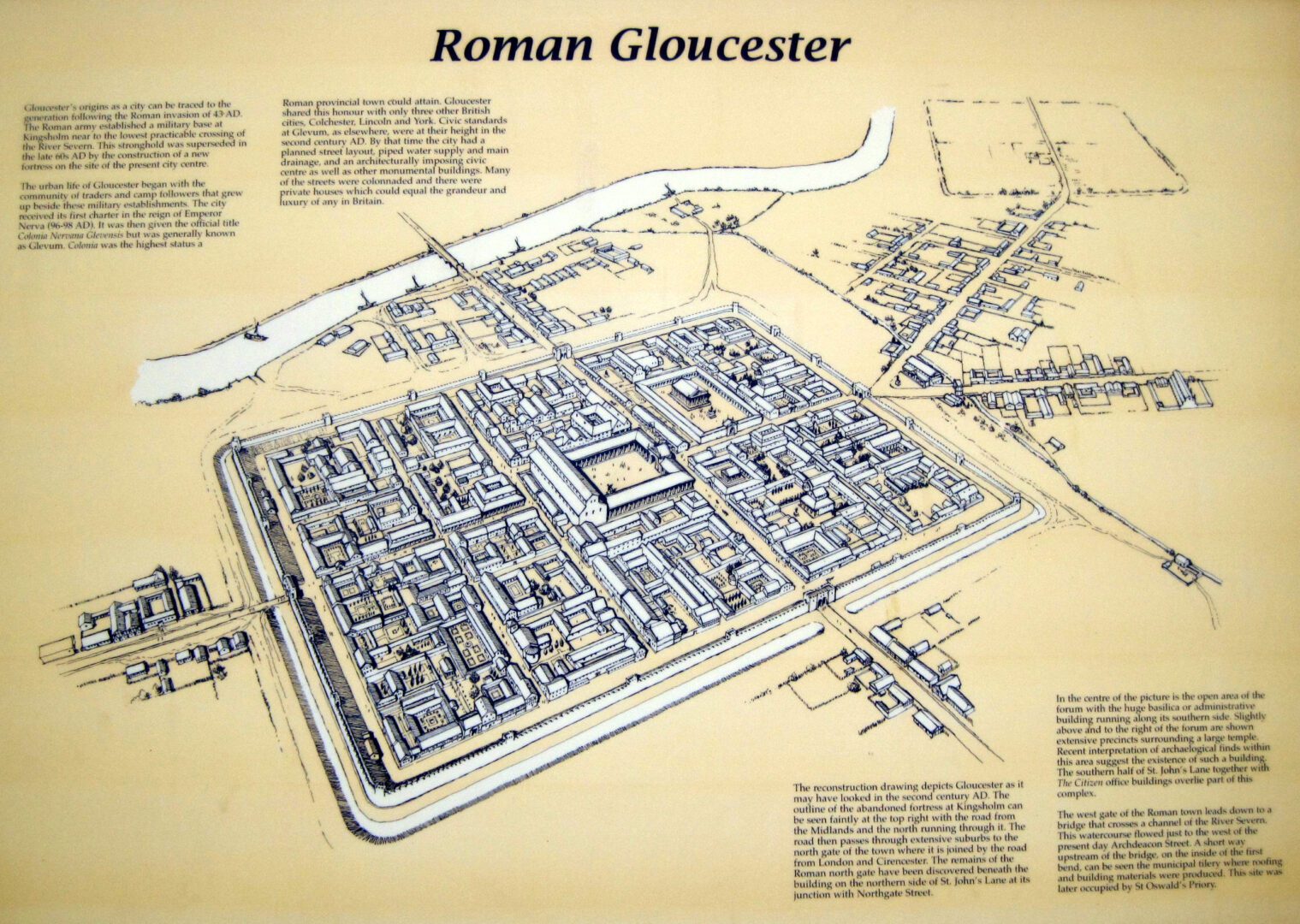
Much of Roman Gloucester is beneath your feet. The city began as a Roman fortress before becoming Glevum, a colonia for retired soldiers. The ancient street pattern can still be traced in modern Northgate, Eastgate, Southgate and Westgate Streets, while sections of the Roman walls survive beneath the modern city.
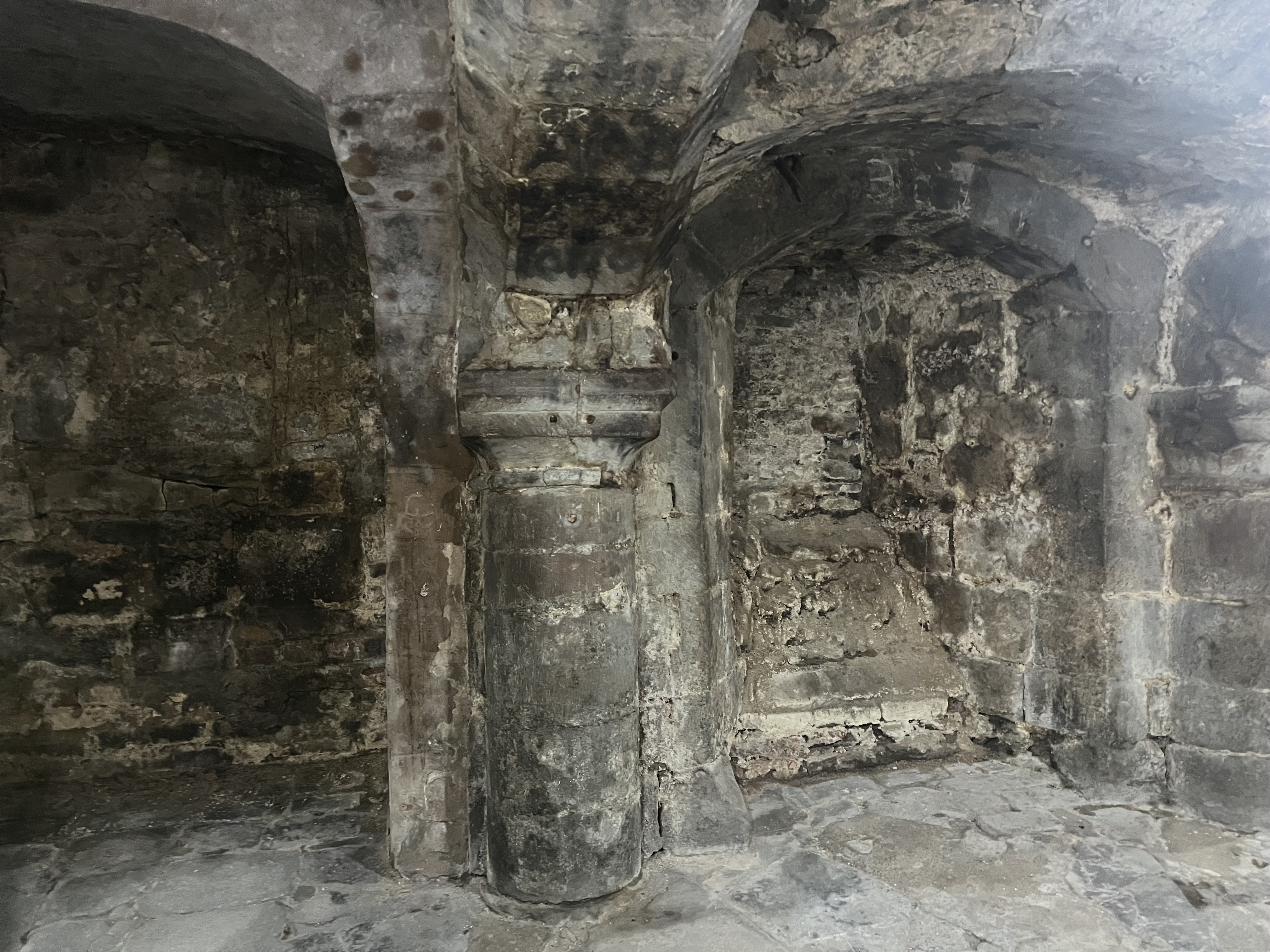
At the Eastgate Chamber, you can actually descend below street level to see remains of the Roman wall and the later medieval gate. Elsewhere the remains of Roman Gloucester emerge unexpectedly beneath buildings or pavements.
The walls themselves have a wonderful history. City archaeologist Andrew Armstrong, opening this year’s History Festival with Fortress City: The Roman Walls of Gloucester, told how Charles II, remembering Gloucester’s stubborn resistance to his father during the Civil War, ordered the city walls demolished after the Restoration. A local builder apparently quoted £50 for the job and began knocking them down — before returning to admit that his estimate had been somewhat optimistic. The real cost, he said, would be £1,500. The wholesale demolition went no further. Instead, Gloucester’s walls gradually succumbed to something rather less dramatic: neglect, changing needs and generations of local people taking the stone for other buildings. Much of what survives today is consequently underground, hidden beneath the modern city.
That is Gloucester in miniature: one city layered on top of another.
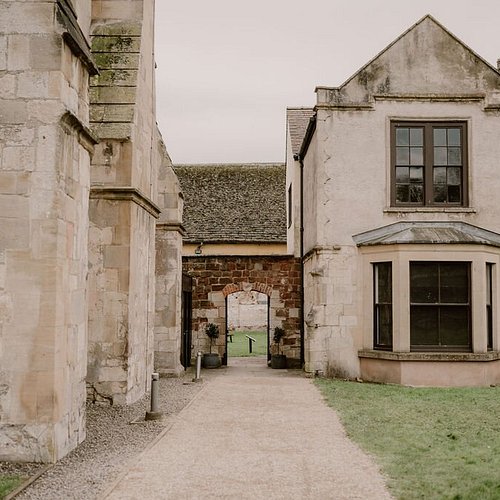
The Saxons are here too. The ruins of St Oswald’s Priory are easily passed without a second glance, yet they belong to a period when Gloucester was already an important royal and religious centre, centuries before the great medieval cathedral took its present form.
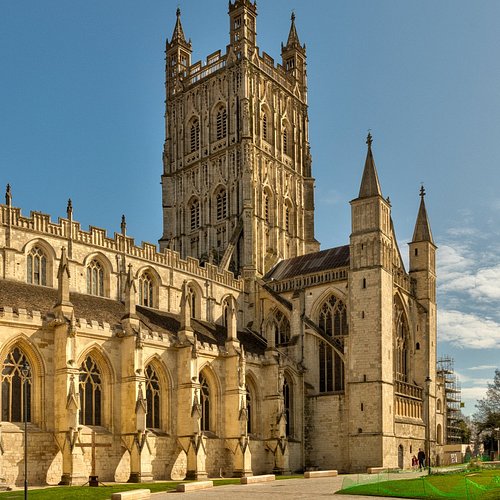
And then, of course, there is Gloucester Cathedral.
The City of Two Potters
But before you even enter it, there is another little piece of Gloucester history tucked into College Court, in the Cathedral’s shadow: the House of the Tailor of Gloucester.
Beatrix Potter based The Tailor of Gloucester on the story of a real local tailor, and chose the little building at 9 College Court as the setting for what she later described as her favourite of her books.
Which means Gloucester can lay claim to being, in its own peculiar way, a city of two Potters.
For inside the Cathedral lies the other one.
Gloucester Cathedral would be remarkable enough for its immense Norman nave alone, but it also contains the tomb of Edward II, whose burial here in 1327 brought pilgrims and wealth to the city. Its magnificent cloisters contain the earliest known example of fan vaulting in the world — an architectural form that would become one of the defining achievements of English Gothic building.
Those cloisters have acquired another life altogether on screen. They became the corridors of Hogwarts in three of the Harry Potter films and have also appeared in Wolf Hall, where medieval architecture required rather less disguise.
It is an entertaining collision of Gloucesters: medieval monks, Tudor intrigue and Harry Potter occupying the same extraordinary stones.
Yet even the Cathedral is only part of the story.
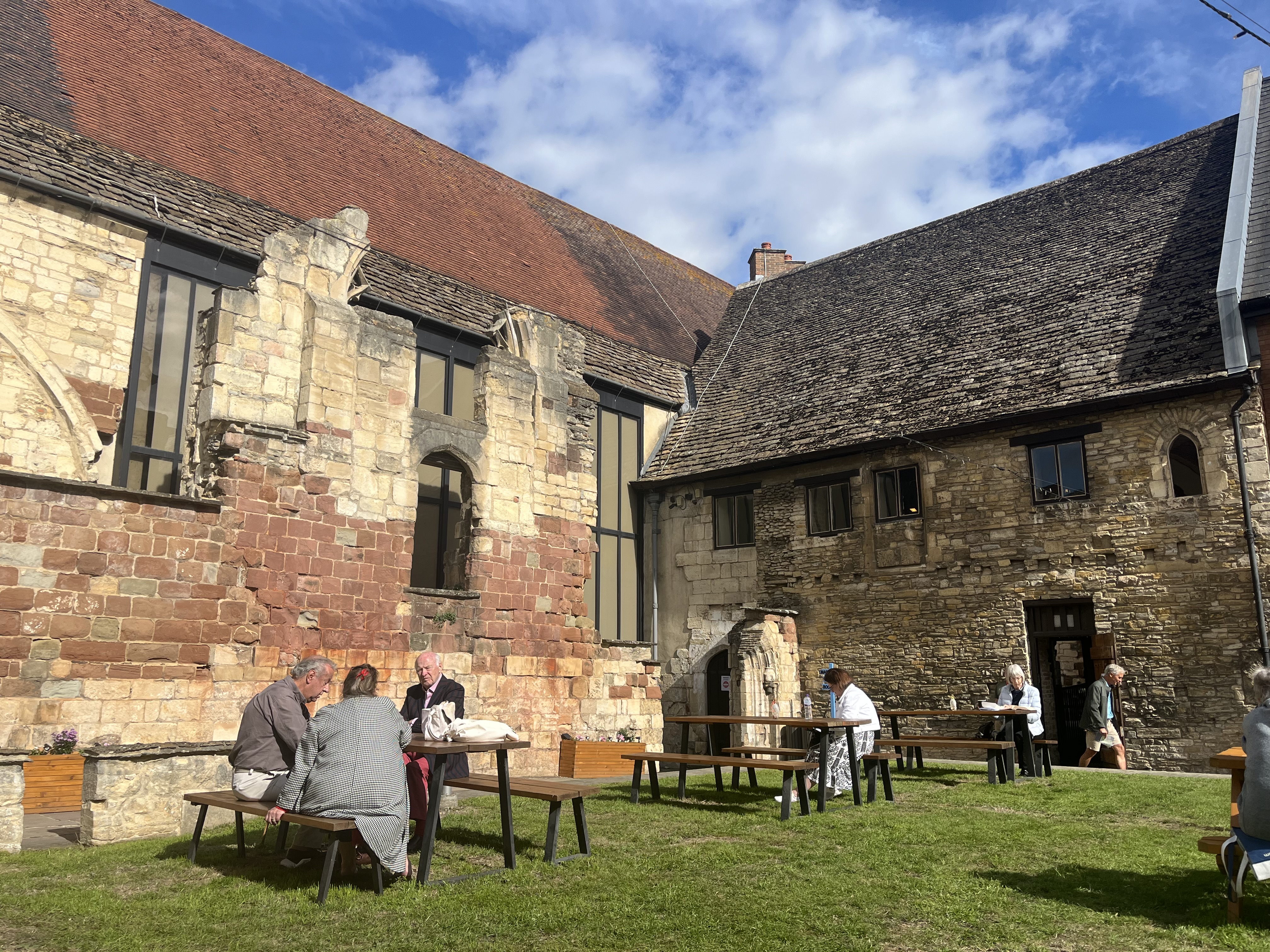
A short walk away is Blackfriars, one of the best-preserved medieval Dominican friaries in Britain, remarkably complete despite the Reformation and everything that followed it.
Then walk down Westgate Street and Gloucester begins revealing itself again.
At number 26, now the Gloucester Antiques Centre, is an extraordinary timber-framed merchant’s house, regarded as the largest surviving historic timber-framed townhouse in the country, with one of the finest Tudor facades in Britain.
You could quite easily walk past it.
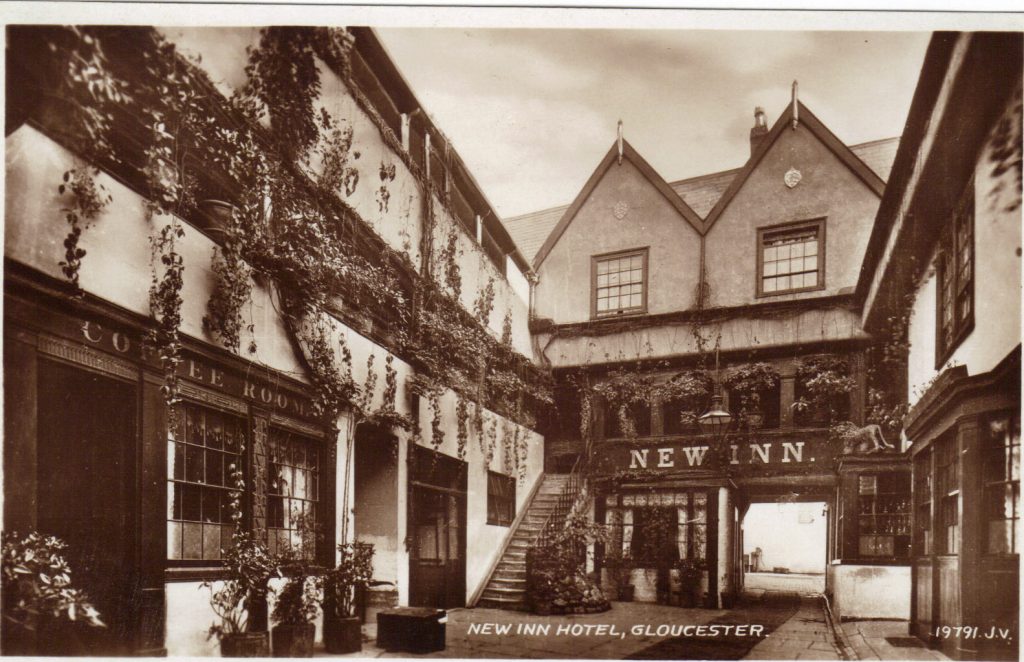
A few minutes away stands the New Inn — “new” only if you are prepared to take a very long view of history. Built around 1451 for St Peter’s Abbey, it still retains its extraordinary galleried courtyard and is regarded as the most complete surviving medieval courtyard inn of its kind.
Tradition has it that Lady Jane Grey was proclaimed queen from its galleries in 1553. Whether or not the story can be proved beyond doubt, simply standing in that courtyard gives an extraordinary sense of how little distance there can be in Gloucester between the 21st century and the 15th.
And that is perhaps the real fascination of the city.
Its history has not been tidily corralled into a heritage quarter. Roman masonry lies below modern pavements. Tudor timbering appears above shop fronts. Medieval cellars survive beneath later buildings. Ancient structures hide behind comparatively ordinary facades.
Desecration of the City.
Of course, Gloucester has lost a great deal.
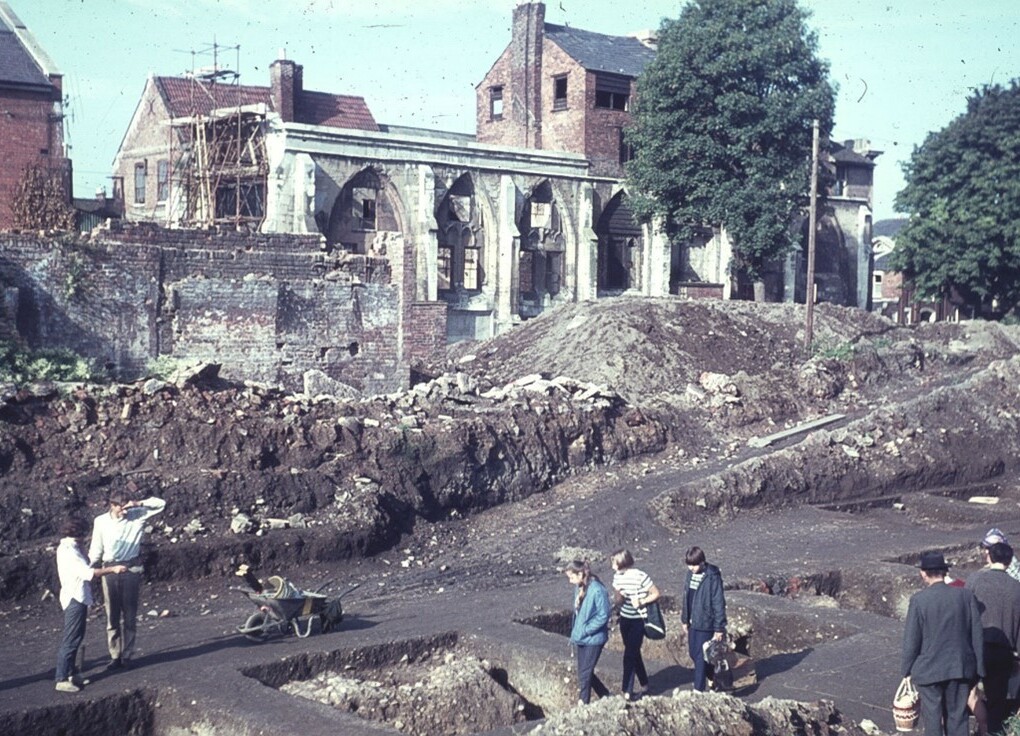
The redevelopment of the 1960s and 70s was particularly brutal. Historic buildings and streets disappeared, often replaced by architecture that has aged considerably less gracefully than the structures it destroyed. There are places where it is painfully easy to imagine what might have survived had attitudes been different.
But perhaps that makes what remains even more remarkable.
The docks are an example of what can happen when regeneration works rather better. The great warehouses and waterways have been retained and adapted, with the Quays bringing shops, restaurants and people back into an area whose industrial history is still plainly visible. You can eat, shop or wander beside the water without forgetting that this was once a working inland port, connected through the Gloucester and Sharpness Canal to the Severn and the sea beyond.

Each September, the Gloucester History Festival brings all these layers together.
For two weeks in 2026 the city itself became part of the event. Blackfriars Priory, rather wonderfully, became the Festival’s main home, with historians and archaeologists speaking within medieval walls. Across the wider programme, more than 200 talks, tours, exhibitions, performances and parades ranged across two thousand years of history.
But perhaps the most appealing part was the way the Festival encouraged people to look at Gloucester again.
Visitors climbed down beneath a modern shopping centre to explore the King’s Bastion, heard about new work on Gloucester’s Roman walls and discovered what archaeology and archival research are still revealing about the Cathedral cloisters.
The Festival did not simply celebrate history already safely written down. It showed that Gloucester is still uncovering it.
And occasionally history walked back into the streets.
The Ermine Street Guard brought the Roman army back to Gloucester in armour and marching kit, while at Blackfriars the medieval world came alive again with friars, crafts, food, music and performance — returning human voices to buildings that can otherwise seem silent.
Dates have already been set for the 2027 Gloucester History Festival, but where it will take place is rather less certain. Gloucester City Council — which has not always appeared to grasp the extraordinary value of the history in its care — has handed Blackfriars Priory back to English Heritage. English Heritage currently has no plans for the site, leaving the Festival without the remarkable medieval setting that has become its home. For a city sitting on nearly 2,000 years of history, it is an extraordinary position to be in: a hugely successful history festival, an exceptional historic venue — and, for the moment, nowhere to put it.
It is difficult to think of a better setting for a history festival, because Gloucester itself still feels unfinished as an historical discovery.
There is always something else to find.
Another cellar. Another fragment of wall. Another timber frame behind a later frontage. Another archaeological discovery beneath a building everyone has walked past for years.
For a city so frequently passed over in favour of its more polished neighbours, Gloucester has an almost absurd abundance of history: Roman, Saxon, medieval, Tudor, industrial and maritime.
Perhaps Gloucester’s greatest problem is simply that it has never quite learned to boast.
You have to peer above shop fronts. Look through gateways. Walk down alleys. Go into buildings. Listen to the monks. Follow the Romans.
Sometimes you have to go underground.
In Gloucester, history makes you work a little harder.
You have to find it.
And the wonderful thing is that, after nearly 2,000 years, there is apparently still more to find.