CHOGM: The Commonwealth’s Future Leaders Have Arrived in Antigua
As young delegates gather for the Commonwealth Youth Forum in Antigua and Barbuda, Zoë Carlton examines an uncomfortable question: how can the Commonwealth expect the next generation to shape its future when many are uncertain what the organisation actually does?
As the Commonwealth gathers in Antigua and Barbuda for CHOGM 2026, much of the attention will inevitably be on the people who lead its 56 nations.
They arrive with official entourages, security details and all the machinery that accompanies a major international summit. But another group gathering in Antigua may have just as much at stake in the decisions being discussed.
The Commonwealth Youth Forum, taking place from 1–4 November, is expected to bring together around 300 young delegates from across the Commonwealth — entrepreneurs, activists, innovators and community leaders representing the next generation of Commonwealth leadership.
Some may go on to become ministers, business leaders, diplomats and decision-makers. Others will return home with new ideas, partnerships and networks that could influence their communities for years to come.
While the leaders at CHOGM address the problems and priorities facing the Commonwealth today, the young people gathering alongside them are looking rather further ahead.
They also face an interesting challenge.
What Is the Commonwealth For?
The Youth Forum is intended to give young people a meaningful voice within the Commonwealth. Yet consultations undertaken in preparation for the gathering highlighted something rather more fundamental: many young people do not fully understand what the Commonwealth is, what it does or why it should matter to them.
Some are enthusiastic. Others are sceptical. Some question whether the Commonwealth has any real relevance to their lives.
That mixed response matters.
The Commonwealth is a voluntary association of 56 independent and equal countries, not an international authority sitting above national governments.
It cannot simply order its members to adopt particular policies. Its influence lies instead in the relationships it creates: a network through which countries with very different populations, economies and geography can cooperate, negotiate, share expertise and, at times, exert collective pressure.
For Caribbean young people accustomed to organisations such as CARICOM, the distinction is important.
For a young Antiguan, the Commonwealth offers access to conversations extending far beyond a small island state. Antigua and Barbuda sits at the same Commonwealth table as India, Canada, Australia, Nigeria and the United Kingdom, alongside fellow small island nations across the Caribbean and Pacific.
But that potential means little if young people do not know the opportunities exist.
More than 1.5 billion young people live in Commonwealth countries. Their circumstances vary enormously, but many of the challenges they face are shared: finding decent work, starting businesses, accessing education and technology, dealing with climate change and having some genuine influence over decisions that will shape their futures.
A Voice, Not Just a Seat
The Commonwealth Youth Forum was established in 1997 to ensure that the concerns and perspectives of young people are considered by governments.
Its role has developed into a formal channel through which young people can formulate recommendations for consideration by Commonwealth leaders.
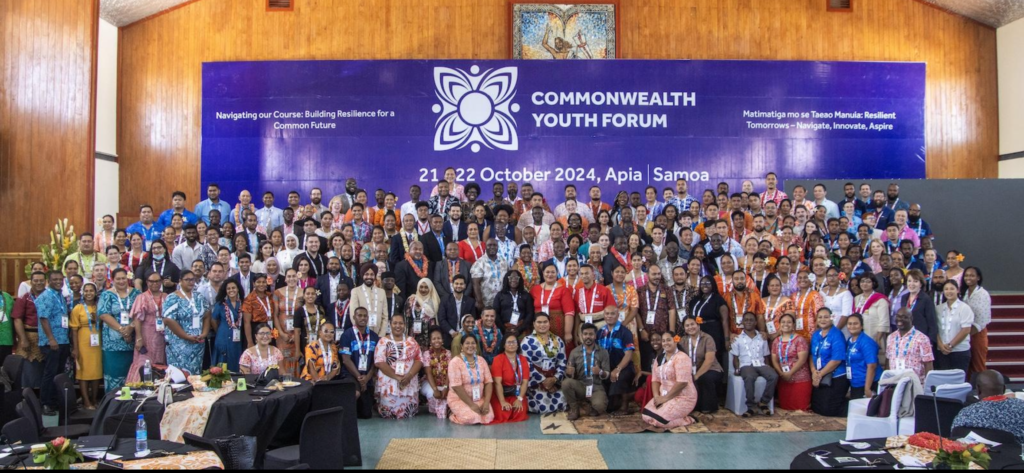
At CHOGM in Samoa in 2024, more than 350 young leaders developed a Youth Declaration calling for greater youth participation in decision-making, resilience and sustainable development.
Antigua and Barbuda now hosts the next stage of that process.
The 2026 Forum is being held under the theme Investing in Youth Agency – Co-Creating Pathways Towards Shared Prosperity.
The international taskforce responsible for helping shape the Forum has been working with the Commonwealth Secretariat, Commonwealth Youth Council and Government of Antigua and Barbuda to develop its programme and policy recommendations.
Those recommendations are intended to contribute to the wider CHOGM process, providing an opportunity for young people to influence discussions among Commonwealth decision-makers.
Importantly, the preparatory work has included listening to criticism as well as enthusiasm.
If young people question the Commonwealth’s relevance, the organisation needs to demonstrate it. If they misunderstand its role, there is a need to explain it.
And if they believe international organisations spend too much time producing declarations and too little time changing lives, that criticism deserves a place in the conversation too.
That makes the Youth Forum considerably more interesting than a conference at which young delegates are invited to sit politely and discuss the future.
Antigua’s Young Leaders
Antigua and Barbuda has an unusually prominent role in delivering this year’s Forum.
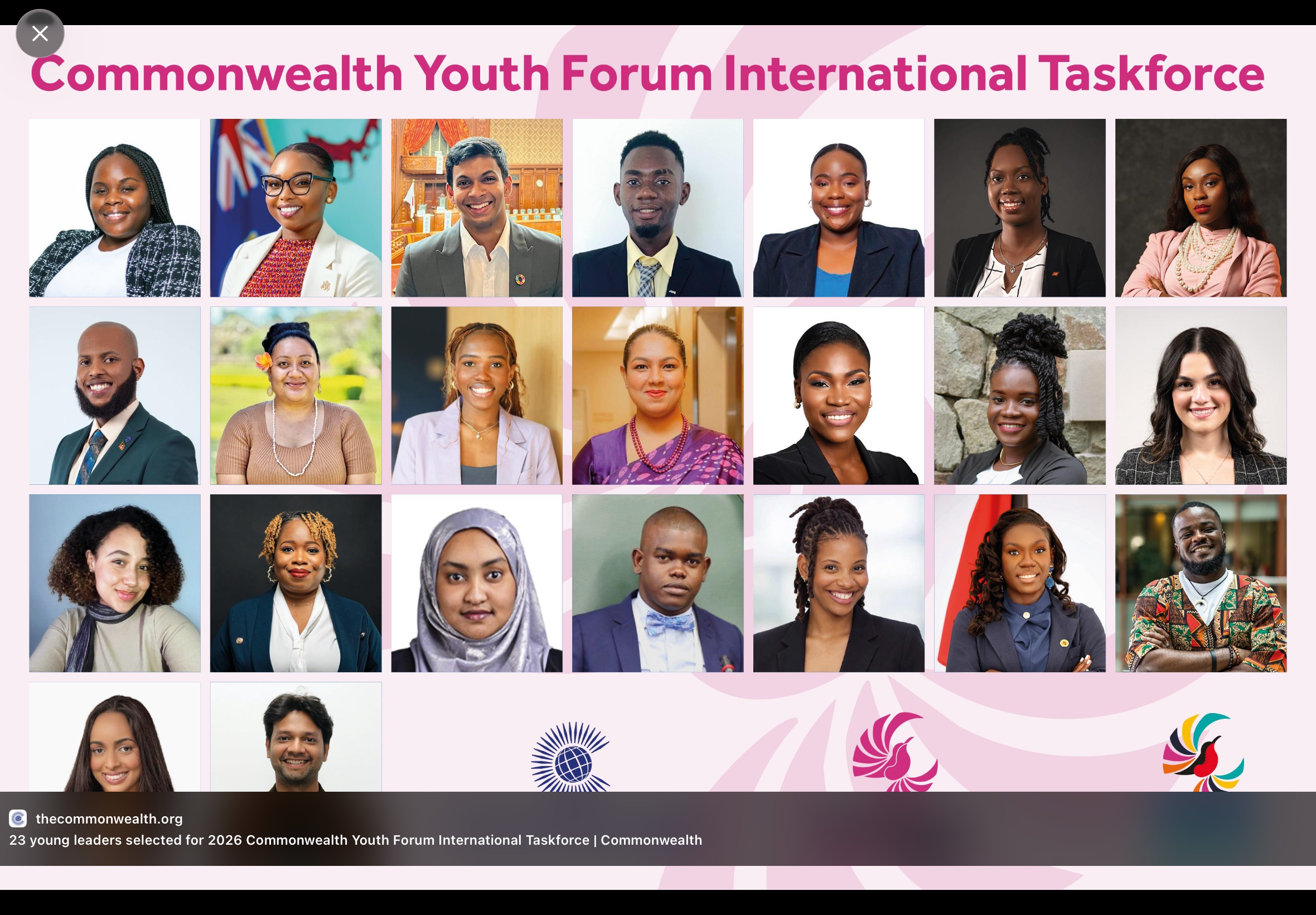
Eleven of the 23 young people selected for the international taskforce are from the host country.
Antiguan Donte Walter is one of its two co-chairs, alongside Neema Sheikh Abdikadir Abdullahi of Kenya.
Sheikh, Vice Chairperson of the Commonwealth Youth Council for Inclusion and Engagement, has an extensive background in student and youth leadership. She made history as the first female president of the Kenya University Students Organisation and has served as Vice President of the East African Students Union.
Her work has focused particularly on inclusion, governance and ensuring that young people have a meaningful role in decision-making.
Walter brings both local and regional experience.
The Antiguan and Barbudan youth leader has served as a delegate to the Commonwealth Youth Council, Partnership and Resources Officer with the Commonwealth Youth Caribbean Alliance and Chair of the Commonwealth Youth Forum.
His academic and professional background spans criminology, homeland and aviation security, risk management and cybersecurity, and he is pursuing a PhD in Criminal Justice and Criminology.
Together with their fellow taskforce members, the two co-chairs have helped shape a Forum intended to produce more than another set of conference speeches.
Beyond the Conference
CHOGM brings representatives of 56 countries together to discuss climate resilience, trade, innovation, equality, sustainable development and economic opportunity.
These are not abstract diplomatic subjects for the generation now entering adulthood. They will live with the consequences of the decisions being made.
Giving them a seat in the conversation therefore matters.
But perhaps Antigua’s Youth Forum can achieve something else as well: begin closing the gap between the Commonwealth as an institution and the millions of young people it is supposed to serve.
That requires more than telling young people the Commonwealth is important. It means explaining what it can do, being equally clear about what it cannot do and giving young people enough space to decide for themselves what they want it to become.
For Antigua and Barbuda, hosting the Forum is about considerably more than providing meeting rooms for several hundred visiting delegates.
It is an opportunity for young Antiguans and Barbudans to discover that CHOGM is not simply something happening around them while official cars sweep through the streets.
They can be participants in it.
The headlines this week will inevitably focus on today’s leaders.
The Youth Forum is concerned with who comes next.
Related Posts

CHOGM:Commonwealth Women Take Centre Stage in Antigua
CHOGM: The World Is Here. What Will Antigua Make of It?