CHOGM:Commonwealth Women Take Centre Stage in Antigua

As the Commonwealth Women’s Forum opens in Antigua and Barbuda, Zoë Carlton examines how discussions on leadership, economic opportunity, climate change and gender-based violence could help shape decisions affecting women and girls across 56 Commonwealth nations.
As Commonwealth leaders gather in Antigua and Barbuda for CHOGM 2026, attention is turning to a gathering that may attract fewer headlines but could have a lasting influence on the lives of millions of women and girls.
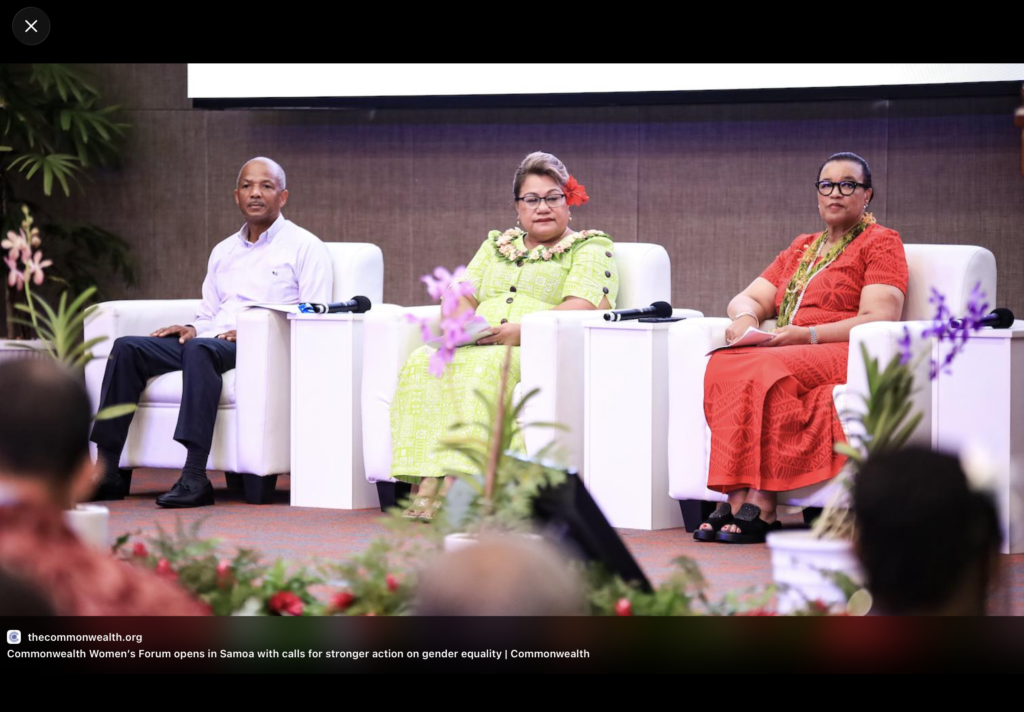
The Commonwealth Women’s Forum opens today, 2 November, at the American University of Antigua, bringing together delegates from across the Commonwealth for three days of discussions on some of the most pressing challenges facing women and girls.
Ministers, ambassadors, academics, development agencies, business leaders and civil society representatives are among those expected to participate in the Forum, which runs until 4 November.
Held alongside the Commonwealth Heads of Government Meeting (CHOGM), the Forum provides an opportunity for women and their advocates to contribute directly to the wider Commonwealth agenda.
CHOGM, which takes place every two years, is the principal decision-making gathering of the 56-member Commonwealth. Alongside the leaders’ meeting, a series of forums allows different sectors of society to bring their concerns, experiences and recommendations into discussions that might otherwise be dominated by governments and diplomats.
The Women’s Forum has become one of the most significant of these platforms.
From Discussion to Action
The Forum is expected to address four broad areas: women and climate change, women’s economic empowerment, women in leadership and decision-making, and gender-based violence.
Although these subjects are frequently discussed in the context of gender equality, their implications extend far beyond it.
Women’s economic participation contributes to national growth and household security. Greater representation in leadership can influence public policy, while access to education, employment and financial resources helps determine opportunities for future generations.
For small island developing states such as Antigua and Barbuda, climate change adds another dimension. The effects of hurricanes, rising sea levels and economic disruption can fall disproportionately on vulnerable communities, making women’s participation in climate policy and disaster resilience particularly important.
Gender-based violence remains a serious challenge across the Commonwealth, affecting women’s safety, health, economic independence and ability to participate fully in society.
The Forum is intended to do more than provide an opportunity to exchange views.
According to information provided by the Forum’s organisers, its purpose is to identify practical approaches that can be adapted to different national circumstances, encourage collaboration and bring greater attention to issues that are sometimes overlooked in international policy discussions.
Importantly, recommendations emerging from the deliberations are intended to be compiled into a formal outcome document.
Rapporteurs and technical teams will record the discussions and recommendations, which will then be transmitted through the appropriate CHOGM channels for consideration by Commonwealth Foreign Ministers and ultimately Heads of Government.
The Forum itself cannot make binding decisions. Nevertheless, this process provides a route through which the experiences and priorities of women can influence wider Commonwealth discussions and future policy.
Building on Previous Forums
The Commonwealth Women’s Forum has steadily grown in prominence.
At CHOGM in Kigali, Rwanda, in 2022, delegates explored women’s leadership, economic empowerment and strategies to combat gender-based violence.
Two years later, in Apia, Samoa, climate change featured prominently alongside economic opportunity, leadership and violence prevention, reflecting concerns shared by many Commonwealth countries, particularly small island states.
The recommendations from these gatherings contributed to wider CHOGM discussions, helping to ensure that issues affecting women and girls remained part of the Commonwealth’s policy agenda.
The Antigua Forum provides an opportunity to build on that work while examining the challenges facing women in an increasingly uncertain world.
An Opportunity for Antigua
For Antigua and Barbuda, hosting the Women’s Forum is significant beyond the international attention accompanying CHOGM.
It places the country at the centre of discussions affecting women and girls throughout the Commonwealth, while providing an opportunity for Caribbean perspectives to be heard alongside those of larger member nations.
The challenges facing women in small island states are not always identical to those confronting women in larger economies. Climate vulnerability, limited economic opportunities and access to resources can create particular difficulties, but the region also has experiences and approaches worth sharing.
The Forum offers an opportunity for those perspectives to contribute to a wider international conversation.
Ultimately, its success will be measured not simply by the number of delegates attending or the discussions taking place, but by whether the recommendations emerging from Antigua help translate international commitments into meaningful action.
For the women and girls whose futures are being discussed, that is what matters most.
Related Posts
CHOGM: The World Is Here. What Will Antigua Make of It?
CHOGM: The Commonwealth’s Future Leaders Have Arrived in Antigua