Ten Years On: Putting Antiguans Back Into the Dockyard
Part 1
Zoë Carlton
Ten years after Nelson’s Dockyard became Antigua and Barbuda’s first UNESCO World Heritage Site, Antigua Echo looks at what has changed — in the stories being uncovered, the way the wider landscape is understood, and the challenges of protecting it for the future. In this three-part series, Zoë Carlton explores how the Dockyard’s history is becoming richer, more complex and, above all, more deeply Antiguan.
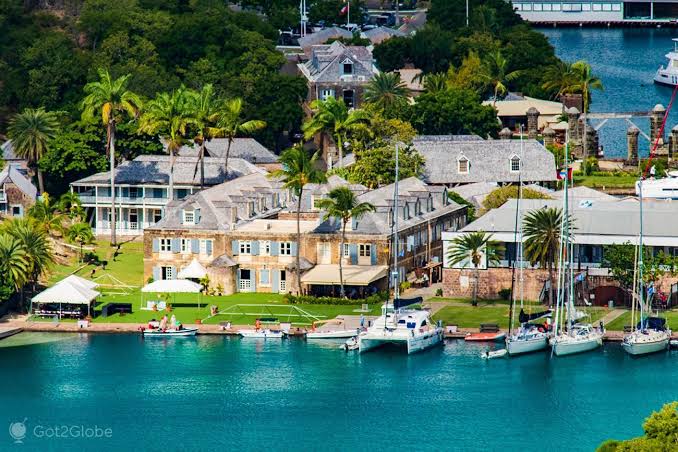
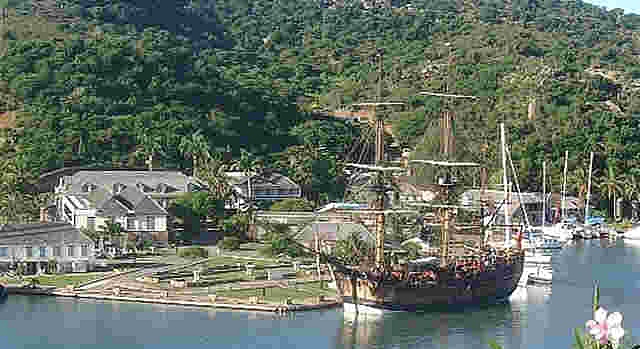
Ten years ago, a collection of old stone buildings beside a beautiful harbour in southern Antigua acquired a new description.
They were no longer simply Nelson’s Dockyard, one of the island’s best-known landmarks and the backdrop to generations of sailing, Sunday expeditions, weddings, parties and school trips.
On July 17, 2016, UNESCO inscribed the Antigua Naval Dockyard and Related Archaeological Sites on the World Heritage List, recognising not only the familiar Dockyard at sea level but the extraordinary landscape around it — fortifications, barracks, lookouts and archaeological remains stretching into the hills above English Harbour.
For a small Caribbean country, it was a very large achievement. Antigua and Barbuda had its first World Heritage Site.
Archaeologist Dr Reg Murphy, then Manager of Heritage Resources at National Parks and Secretary-General of Antigua and Barbuda’s National Commission for UNESCO, was one of the central figures behind the successful nomination.
It was the culmination of decades of Antiguan preservation and research, building on the work of people including Desmond Nicholson and many others who had fought to save, restore and understand the Dockyard.
There was resistance. Murphy remembers some people regarding the Dockyard primarily as a monument to colonialism and questioning why Antigua should celebrate it.
But the research was already showing why that interpretation was incomplete.
“This isn’t simply an English, white, colonial story,” Murphy says.
And perhaps the most interesting thing about the ten years since UNESCO agreed with him is just how much more complicated — and much more Antiguan — that story has become.
UNESCO recognised an outstanding Georgian naval facility adapted to its Caribbean environment. But its inscription also acknowledged that the traditional emphasis on admirals, naval strategy and architecture had often left less room for another essential part of the story: the Dockyard was constructed and operated through the labour and skills of enslaved Africans.
Murphy says research suggested that at times perhaps 70 per cent of those working within the naval system were enslaved Africans or people of African descent.
“They were doing an enormous range of work throughout the harbour and the naval complex,” he says.
Historian Desley Gardner says the broad outlines of much of this were not unknown ten years ago. Desmond Nicholson and earlier researchers had left tantalising clues and references.
What has changed is the depth.
More intensive archival research and archaeology have begun filling in the gaps, revealing not an anonymous mass of labourers but stonemasons, carpenters, sailmakers, skilled maritime workers, soldiers, women and families.
And, increasingly, names.
The National Parks Authority’s 8th of March Project began with research into a gunpowder explosion at English Harbour on March 8, 1744, which killed enslaved African workers.
Researchers recovered eight names: Billy, London, James Soe, Caramatee Quamono, Dick, Joe, Scipio and Johnno.
Then they kept looking.
Gardner remembers eight names becoming ten more, then 21, then 100. Today, more than 1,600 names have been recovered from the records.
Some have struck a particular chord because they appear in the family trees of Antiguans living today.
Gardner remembers Lydia Burke because she had not expected to find the surname in records from that period. She talks too about Jane Lake and Mary Vermont, two women buried among soldiers at the Middle Ground military cemetery.
Jane was just 15.
Was she a soldier’s daughter? A wife? Who was she, and why was she buried there?
The answer is not yet known.
That uncertainty is part of the excitement. The history of the Dockyard is no longer something completed long ago and written neatly on a sign. It is still being discovered.
An archival research trip to Britain in 2019 digitised more than 14,000 pages of documents. Archaeology, church registers, death records, family histories and oral accounts are steadily adding lives to a story once dominated by buildings, admirals and battles.
For Gardner, that is fundamental.
“This is their history. It’s not just British history.”
Nelson himself was stationed in Antigua from 1784 to 1787 and remains an important part of the Dockyard’s history and of the story by which generations of visitors have come to know it.
But the research of the past decade has increasingly placed his experience within a much larger picture.
The naval officers whose names survived in official records were only one part of an extraordinarily complex community. Around them were soldiers, sailors, enslaved and free Africans, skilled craftsmen, women, children and families whose lives were also bound up with English Harbour.
For Murphy, that broader perspective includes Nelson but goes far beyond him.
“Heritage isn’t really about one famous individual,” he says. “It’s about the collective history of the place and the people who made it work.”
Ten years after UNESCO recognition, that may be one of the most important changes of all. The Dockyard remains a remarkable collection of buildings, but the people who built, worked in and lived around them are moving back to the centre of the story.
And, name by name, that story is becoming Antigua’s own.
Related Posts
Rashid Walker: A Voice Raised in Praise
Slates: Fine Dining with Flair