Small Island, Big Questions
By Zoë Carlton
The King has gone. The Dockyard is quiet. The CHOGM Task Force group chats are no more.
So what now?
After months of preparation, four days of diplomacy, an extraordinary gathering of international leaders and enough protocol to keep a small army of officials awake at night, Antigua and Barbuda has waved goodbye to the Commonwealth Heads of Government Meeting and stepped off the world stage for a while.
The flags are coming down, the security barriers are disappearing and the traffic can once again proceed without being interrupted by a passing prime minister. There were speeches, handshakes, receptions and photographs. There was a royal visit, an Independence anniversary and a great deal of talk about partnership, prosperity and the future.
It was undoubtedly an impressive occasion. More than 3,000 delegates descended upon St John’s as one of the world’s smallest nations hosted an organisation representing 56 countries and 2.7 billion people. For a few days, the world came to Antigua.
But hosting a successful summit and benefiting from one are not necessarily the same thing.
Commonwealth Secretary-General Shirley Botchwey put it rather neatly: “Our people will judge this meeting by what it delivers for them.”
Quite so.
Beyond the handshakes
The official theme was Accelerating Partnerships and Investment for a Prosperous Commonwealth. Not exactly a phrase destined for a T-shirt, but behind it lay some important ambitions.
Prime Minister Gaston Browne was particularly clear about the challenge. “A Commonwealth connection must do more than open doors,” he told delegates. He called for responsibilities, realistic timelines and measurable outcomes, rather than another collection of diplomatic promises.
It is a welcome standard against which to judge the summit. As the Commonwealth’s new Chair-in-Office, Browne will now have an opportunity to ensure those measurements are actually made.
The final communiqué addressed climate change, international finance, trade, democracy, maritime rights and economic resilience. These are hardly abstract diplomatic concerns for a country like Antigua and Barbuda. For small island states, securing affordable finance, protecting coastlines and surviving increasingly destructive weather are matters of economic survival.
One significant outcome was the Commonwealth’s reaffirmation that countries should retain their established maritime zones and associated rights despite physical changes caused by rising sea levels.
For an island nation whose future is inseparable from the sea, that matters.
Leaders also committed to improving access to climate finance, strengthening renewable energy investment and recognising the particular vulnerabilities of small states when international financial institutions decide who qualifies for assistance.
These are familiar arguments from Antigua and Barbuda. The difference is that they were being advanced on a stage shared with some of the world’s largest economies.
That is one of the Commonwealth’s genuine advantages. It gives smaller nations a seat at a table they might otherwise struggle to reach. Whether the larger nations are listening quite as attentively as their speeches suggest is another matter.
Promises, promises
There is, of course, a familiar ring to some of these commitments. Year after year, the United Nations climate conferences produce similarly earnest declarations about protecting vulnerable nations and providing the finance to do so. And year after year, questions remain about delivery.
The record is mixed. Wealthy nations eventually met their pledge to mobilise US$100 billion annually in climate finance, but two years late. Meanwhile, the gap between the funding available to help developing countries adapt to climate change and the amount they actually need remains enormous.
CHOGM is not COP and its purpose is different. But the same question applies: will the commitments translate into action? For Antigua and Barbuda, the distinction between announcing climate finance and receiving it is considerably more than academic.
The sea is not waiting for the next communiqué.
The money question
Then there is investment.
The Commonwealth announced partnerships and financial and in-kind commitments exceeding US$500 million during CHOGM, covering renewable energy, youth skills development, environmental monitoring and trade opportunities.
Among them was a US$60 million commitment from Planet Labs to provide satellite data over three years, helping Commonwealth countries monitor environmental change and strengthen climate resilience.
A new investment platform was also presented, featuring more than 60 projects from 20 countries seeking approximately US$30 billion in financing.
Impressive figures, certainly. But there is an important distinction between money committed, projects seeking investment and funds actually delivered. These announcements covered the Commonwealth as a whole, rather than funding allocated specifically to Antigua and Barbuda. Moreover, some commitments involved services and resources rather than cash.
International summits are remarkably good at announcing impressive numbers. Turning them into functioning businesses, training opportunities and sustainable employment is the considerably less glamorous part.
There were useful bilateral conversations too, giving Antigua and Barbuda opportunities to advance its interests directly with international partners.
The economic benefits of hosting CHOGM deserve similar scrutiny.
Hotels, transport operators, caterers and other businesses had opportunities to benefit from the influx of visitors. Yet a serious assessment will require evidence of the local revenue generated, the public expenditure involved and any longer-term commercial gains.
The question is not whether the meeting looked impressive. It did.
The question is whether the investment of time, money and effort will continue to pay dividends.
The people beyond the podium
Perhaps some of the most important discussions took place away from the heads of government.
The Women’s, Youth, People’s and Business Forums brought together delegates whose lives are directly affected by the policies being debated at the top.
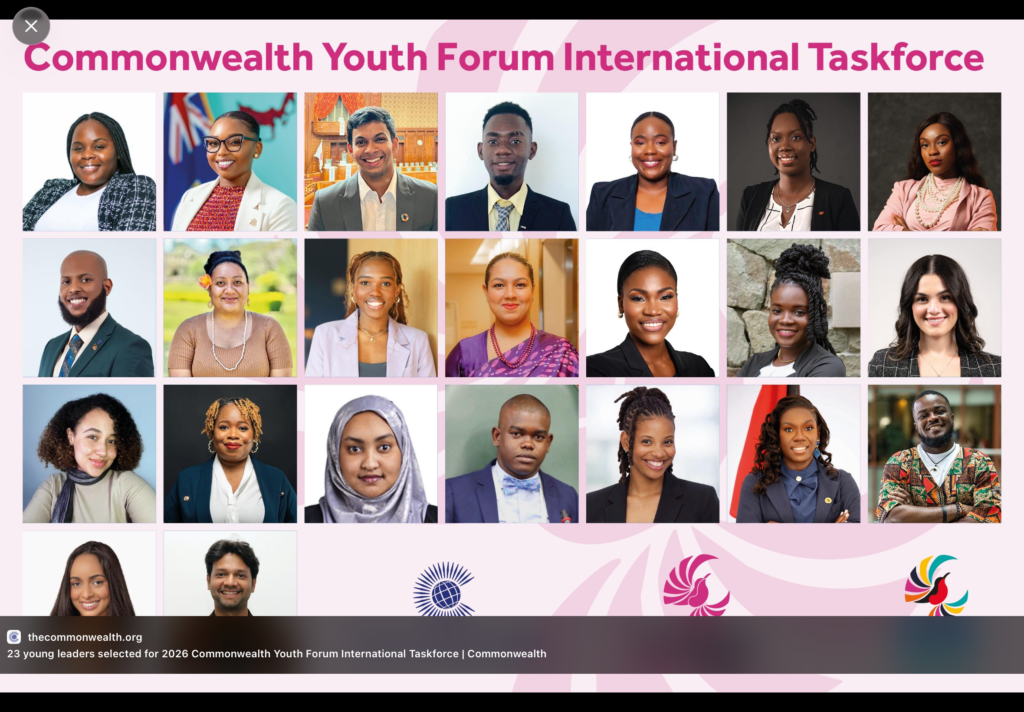
At the Youth Forum, more than 300 young leaders from across the Commonwealth considered economic opportunity, political participation, climate resilience and inclusion.
They were refreshingly impatient with diplomatic formalities.
In a joint message to leaders, Youth Forum Taskforce Co-Chairs Neema Sheikh Abdikadir Abdullahi and Antigua and Barbuda’s Donte Walter declared that their generation was “ready to move beyond talk”.
Their final policy document called for meaningful youth participation in decision-making, better routes into employment and enterprise, greater access to finance and stronger accountability from institutions.
They have done their part. The question now is whether the governments receiving those recommendations intend to do theirs.
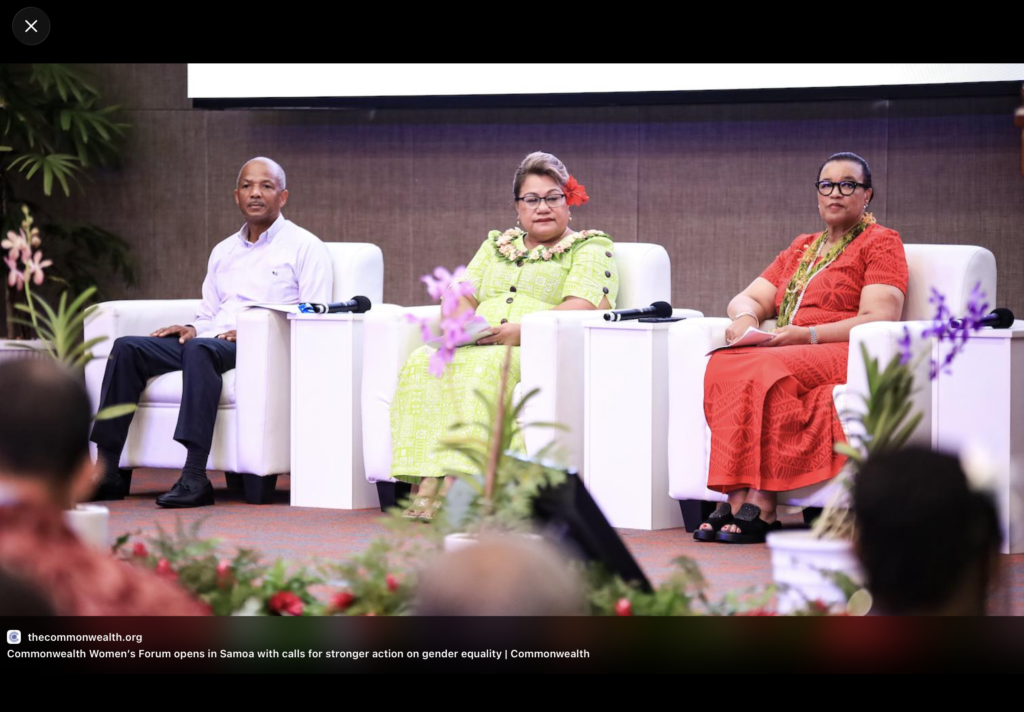
At the Women’s Forum, held at the American University of Antigua, discussions ranged from economic empowerment and leadership to climate finance and violence against women and girls.
Queen Camilla addressed the Forum, expressing solidarity with survivors of violence and calling for collective action.
The People’s Forum gave civil society an opportunity to press its priorities, including human rights, inclusion and climate justice.
These gatherings matter because the Commonwealth cannot survive indefinitely as an organisation defined chiefly by its heads of government. Its future depends upon people who may never attend a diplomatic reception or shake hands with a monarch.
Their recommendations are intended to influence policy. The challenge now is to establish which are adopted, who is responsible for carrying them forward and how progress will be measured.
Consultation is a beginning. It should never be mistaken for delivery.
Small Island, Big Vibes
There was another, less easily measured benefit.
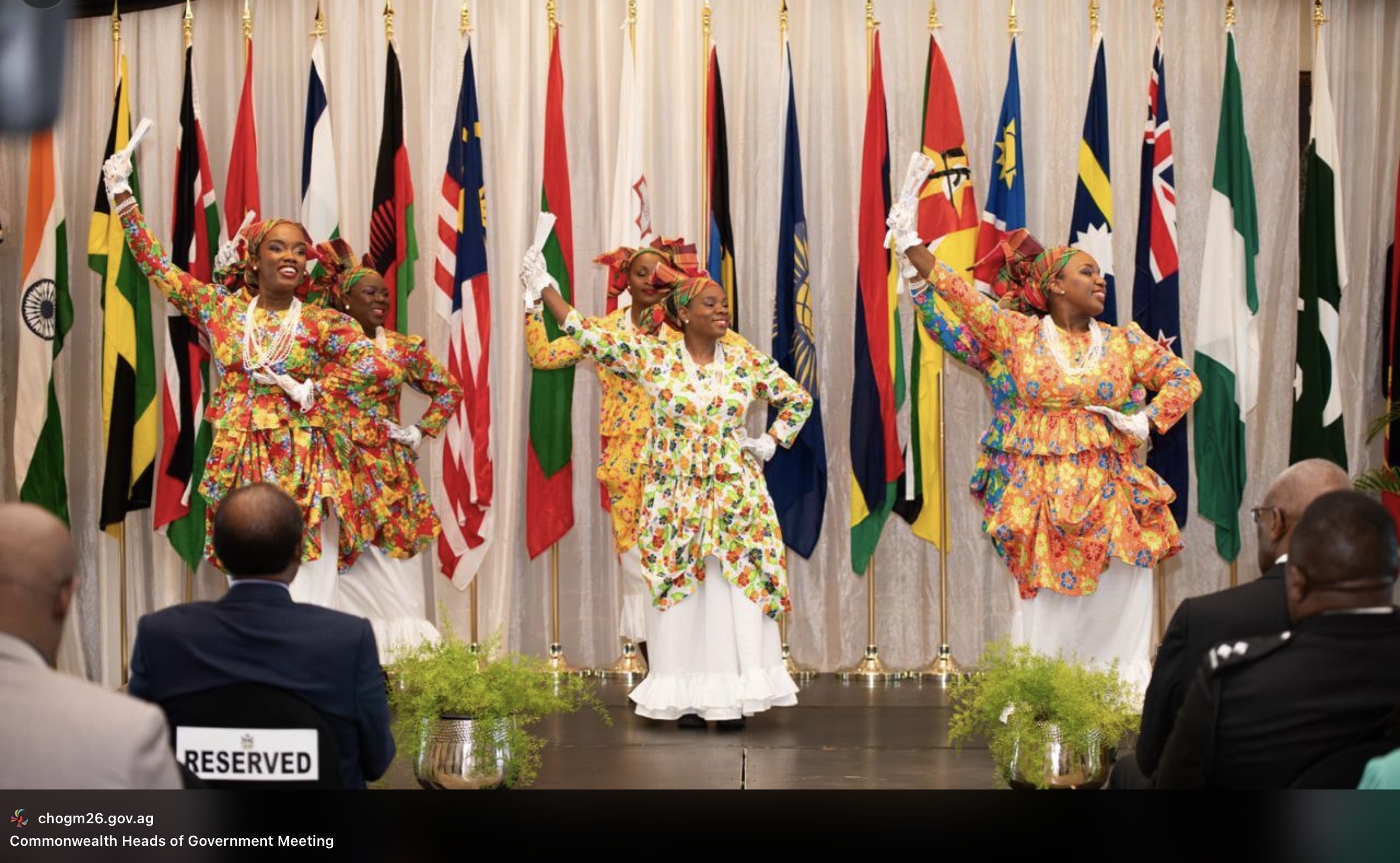
For a few days, Antigua and Barbuda was not simply a holiday destination with beautiful beaches and excellent sailing. It was the setting for discussions about the international economy, democracy, climate change and the future of a major global organisation.
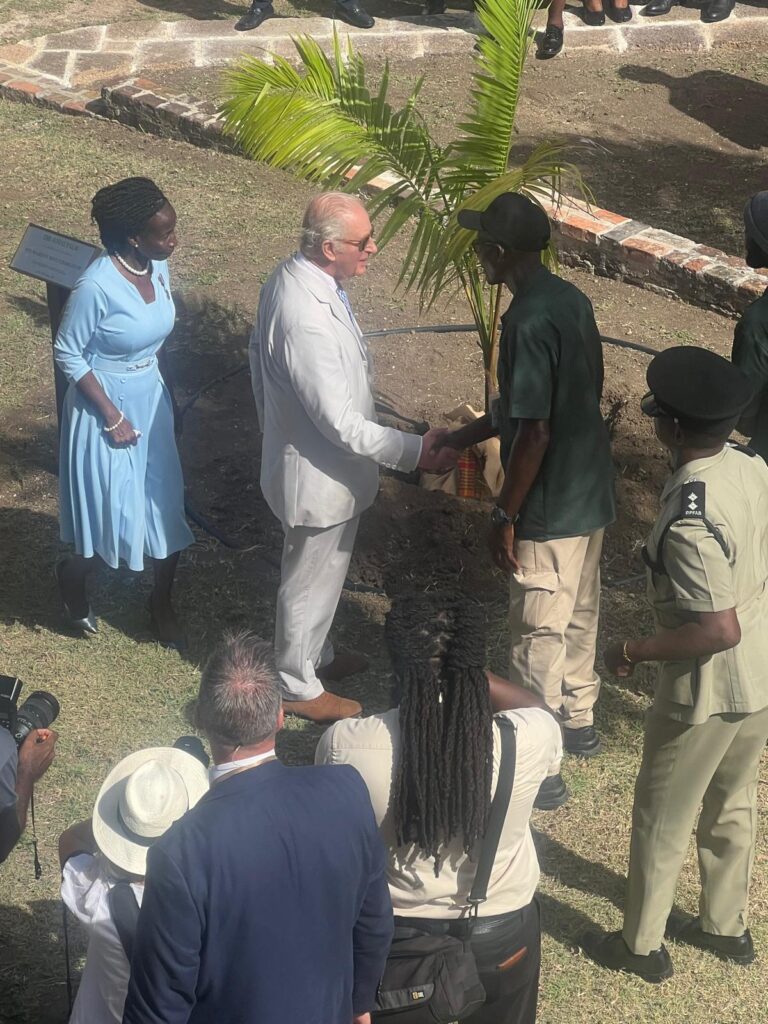
King Charles captured something of the occasion when he praised Antigua and Barbuda’s international contribution.
“For one of the smallest nations on Earth, your impact in the world is tremendous,” he told the opening ceremony.
He then endorsed the wonderfully Antiguan expression “Small Island, Big Vibes”.
Clearly, His Majesty understands the place.
Behind the royal appearances, diplomatic receptions and carefully choreographed ceremonies was an army of Antiguans making it all happen.
Protocol officers managed visiting delegations, security personnel worked long hours, drivers navigated unfamiliar demands and hospitality staff ensured that thousands of visitors were fed, accommodated and looked after. Volunteers, organisers, technicians and countless others contributed to an undertaking of extraordinary complexity.
Many were doing their usual jobs under anything but usual circumstances. Most will never feature in an official photograph.
They deserve considerable credit.
There were logistical challenges, of course, but the country delivered a major international gathering while simultaneously celebrating its 45th anniversary of Independence.
It demonstrated something important: a small nation can organise, accommodate and contribute meaningfully to an event on the world stage.
That achievement cannot be measured in dollars. Nor should it be confused with the longer-term economic and diplomatic benefits that remain to be established.
The Commonwealth question
Then there is the wider issue: what exactly is the Commonwealth for?
It is not a government, a trading bloc or an organisation capable of compelling its members to act. Its countries vary enormously in wealth, size, politics and priorities.
Its shared history is complicated, often painful and impossible to reduce to ceremonial declarations of friendship.
The King acknowledged that history in Antigua, speaking directly about the enduring consequences of the transatlantic slave trade.
“We cannot change the actions of those who came before us,” he said. “We can, however, learn from the past.”
It was an acknowledgement of a difficult history, although the debate about reparatory justice goes considerably further than expressions of regret.
Browne called for the Commonwealth to continue structured dialogue on the enduring consequences of slavery and colonialism, building upon commitments made at the previous summit in Samoa.
Whether such discussions will produce tangible action remains an important question.
Yet the Commonwealth also possesses something increasingly unusual: a network of countries from different regions and economic circumstances, with established relationships and a willingness, at least in principle, to cooperate.
In a divided world, that is not insignificant.
The difficulty is ensuring that cooperation becomes more than another solemn promise.
What remains?
So, was CHOGM worth it?
It is too early to deliver a definitive verdict.
Antigua and Barbuda demonstrated that it could host a major international gathering, gave its concerns a prominent platform and helped shape discussions on issues vital to small island states.
There were agreements, new initiatives, investment announcements and important contributions from people outside government. Those are genuine achievements.
But the real test begins after the departure lounge.
Will climate finance become easier to obtain? Will investment announcements produce jobs and opportunities? Will the voices heard in the forums influence decisions? Will Antigua and Barbuda’s international profile translate into measurable benefits at home?
These are questions worth returning to, not in another two years when the Commonwealth meets again, but in the months ahead.
Browne himself challenged the organisation to demonstrate its relevance through results rather than history or sentiment. It is a challenge that should apply equally to the host nation.
For now, the motorcades have gone, the delegates have returned home and the Dockyard belongs to its usual inhabitants once more.
The world came to Antigua.
Now let’s see what it leaves behind.But what did hosting the Commonwealth’s biggest gathering achieve?
By Zoë Carlton
The King has gone. The Dockyard is quiet. The CHOGM Task Force group chats are no more.
So what now?
After months of preparation, four days of diplomacy, an extraordinary gathering of international leaders and enough protocol to keep a small army of officials awake at night, Antigua and Barbuda has waved goodbye to the Commonwealth Heads of Government Meeting and stepped off the world stage for a while.
The flags are coming down, the security barriers are disappearing and the traffic can once again proceed without being interrupted by a passing prime minister. There were speeches, handshakes, receptions and photographs. There was a royal visit, an Independence anniversary and a great deal of talk about partnership, prosperity and the future.
It was undoubtedly an impressive occasion. More than 3,000 delegates descended upon St John’s as one of the world’s smallest nations hosted an organisation representing 56 countries and 2.7 billion people. For a few days, the world came to Antigua.
But hosting a successful summit and benefiting from one are not necessarily the same thing.
Commonwealth Secretary-General Shirley Botchwey put it rather neatly: “Our people will judge this meeting by what it delivers for them.”
Quite so.
Beyond the handshakes
The official theme was Accelerating Partnerships and Investment for a Prosperous Commonwealth. Not exactly a phrase destined for a T-shirt, but behind it lay some important ambitions.
Prime Minister Gaston Browne was particularly clear about the challenge. “A Commonwealth connection must do more than open doors,” he told delegates. He called for responsibilities, realistic timelines and measurable outcomes, rather than another collection of diplomatic promises.
It is a welcome standard against which to judge the summit. As the Commonwealth’s new Chair-in-Office, Browne will now have an opportunity to ensure those measurements are actually made.
The final communiqué addressed climate change, international finance, trade, democracy, maritime rights and economic resilience. These are hardly abstract diplomatic concerns for a country like Antigua and Barbuda. For small island states, securing affordable finance, protecting coastlines and surviving increasingly destructive weather are matters of economic survival.
One significant outcome was the Commonwealth’s reaffirmation that countries should retain their established maritime zones and associated rights despite physical changes caused by rising sea levels.
For an island nation whose future is inseparable from the sea, that matters.
Leaders also committed to improving access to climate finance, strengthening renewable energy investment and recognising the particular vulnerabilities of small states when international financial institutions decide who qualifies for assistance.
These are familiar arguments from Antigua and Barbuda. The difference is that they were being advanced on a stage shared with some of the world’s largest economies.
That is one of the Commonwealth’s genuine advantages. It gives smaller nations a seat at a table they might otherwise struggle to reach. Whether the larger nations are listening quite as attentively as their speeches suggest is another matter.
Promises, promises
There is, of course, a familiar ring to some of these commitments. Year after year, the United Nations climate conferences produce similarly earnest declarations about protecting vulnerable nations and providing the finance to do so. And year after year, questions remain about delivery.
The record is mixed. Wealthy nations eventually met their pledge to mobilise US$100 billion annually in climate finance, but two years late. Meanwhile, the gap between the funding available to help developing countries adapt to climate change and the amount they actually need remains enormous.
CHOGM is not COP and its purpose is different. But the same question applies: will the commitments translate into action? For Antigua and Barbuda, the distinction between announcing climate finance and receiving it is considerably more than academic.
The sea is not waiting for the next communiqué.
The money question
Then there is investment.
The Commonwealth announced partnerships and financial and in-kind commitments exceeding US$500 million during CHOGM, covering renewable energy, youth skills development, environmental monitoring and trade opportunities.
Among them was a US$60 million commitment from Planet Labs to provide satellite data over three years, helping Commonwealth countries monitor environmental change and strengthen climate resilience.
A new investment platform was also presented, featuring more than 60 projects from 20 countries seeking approximately US$30 billion in financing.
Impressive figures, certainly. But there is an important distinction between money committed, projects seeking investment and funds actually delivered. These announcements covered the Commonwealth as a whole, rather than funding allocated specifically to Antigua and Barbuda. Moreover, some commitments involved services and resources rather than cash.
International summits are remarkably good at announcing impressive numbers. Turning them into functioning businesses, training opportunities and sustainable employment is the considerably less glamorous part.
There were useful bilateral conversations too, giving Antigua and Barbuda opportunities to advance its interests directly with international partners.
The economic benefits of hosting CHOGM deserve similar scrutiny.
Hotels, transport operators, caterers and other businesses had opportunities to benefit from the influx of visitors. Yet a serious assessment will require evidence of the local revenue generated, the public expenditure involved and any longer-term commercial gains.
The question is not whether the meeting looked impressive. It did.
The question is whether the investment of time, money and effort will continue to pay dividends.
The people beyond the podium
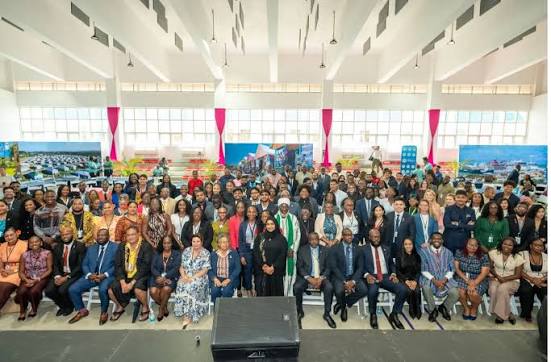
Perhaps some of the most important discussions took place away from the heads of government.
The Women’s, Youth, People’s and Business Forums brought together delegates whose lives are directly affected by the policies being debated at the top.
At the Youth Forum, more than 300 young leaders from across the Commonwealth considered economic opportunity, political participation, climate resilience and inclusion.
They were refreshingly impatient with diplomatic formalities.
In a joint message to leaders, Youth Forum Taskforce Co-Chairs Neema Sheikh Abdikadir Abdullahi and Antigua and Barbuda’s Donte Walter declared that their generation was “ready to move beyond talk”.
Their final policy document called for meaningful youth participation in decision-making, better routes into employment and enterprise, greater access to finance and stronger accountability from institutions.
They have done their part. The question now is whether the governments receiving those recommendations intend to do theirs.
At the Women’s Forum, held at the American University of Antigua, discussions ranged from economic empowerment and leadership to climate finance and violence against women and girls.
Queen Camilla addressed the Forum, expressing solidarity with survivors of violence and calling for collective action.
The People’s Forum gave civil society an opportunity to press its priorities, including human rights, inclusion and climate justice.
These gatherings matter because the Commonwealth cannot survive indefinitely as an organisation defined chiefly by its heads of government. Its future depends upon people who may never attend a diplomatic reception or shake hands with a monarch.
Their recommendations are intended to influence policy. The challenge now is to establish which are adopted, who is responsible for carrying them forward and how progress will be measured.
Consultation is a beginning. It should never be mistaken for delivery.
Small Island, Big Vibes
There was another, less easily measured benefit.
For a few days, Antigua and Barbuda was not simply a holiday destination with beautiful beaches and excellent sailing. It was the setting for discussions about the international economy, democracy, climate change and the future of a major global organisation.
King Charles captured something of the occasion when he praised Antigua and Barbuda’s international contribution.
“For one of the smallest nations on Earth, your impact in the world is tremendous,” he told the opening ceremony.
He then endorsed the wonderfully Antiguan expression “Small Island, Big Vibes”.
Clearly, His Majesty understands the place.
Behind the royal appearances, diplomatic receptions and carefully choreographed ceremonies was an army of Antiguans making it all happen.
Protocol officers managed visiting delegations, security personnel worked long hours, drivers navigated unfamiliar demands and hospitality staff ensured that thousands of visitors were fed, accommodated and looked after. Volunteers, organisers, technicians and countless others contributed to an undertaking of extraordinary complexity.
Many were doing their usual jobs under anything but usual circumstances. Most will never feature in an official photograph.
They deserve considerable credit.
There were logistical challenges, of course, but the country delivered a major international gathering while simultaneously celebrating its 45th anniversary of Independence.
It demonstrated something important: a small nation can organise, accommodate and contribute meaningfully to an event on the world stage.
That achievement cannot be measured in dollars. Nor should it be confused with the longer-term economic and diplomatic benefits that remain to be established.
The Commonwealth question
Then there is the wider issue: what exactly is the Commonwealth for?
It is not a government, a trading bloc or an organisation capable of compelling its members to act. Its countries vary enormously in wealth, size, politics and priorities.
Its shared history is complicated, often painful and impossible to reduce to ceremonial declarations of friendship.
The King acknowledged that history in Antigua, speaking directly about the enduring consequences of the transatlantic slave trade.
“We cannot change the actions of those who came before us,” he said. “We can, however, learn from the past.”
It was an acknowledgement of a difficult history, although the debate about reparatory justice goes considerably further than expressions of regret.
Browne called for the Commonwealth to continue structured dialogue on the enduring consequences of slavery and colonialism, building upon commitments made at the previous summit in Samoa.
Whether such discussions will produce tangible action remains an important question.
Yet the Commonwealth also possesses something increasingly unusual: a network of countries from different regions and economic circumstances, with established relationships and a willingness, at least in principle, to cooperate.
In a divided world, that is not insignificant.
The difficulty is ensuring that cooperation becomes more than another solemn promise.
What remains?
So, was CHOGM worth it?
It is too early to deliver a definitive verdict.
Antigua and Barbuda demonstrated that it could host a major international gathering, gave its concerns a prominent platform and helped shape discussions on issues vital to small island states.
There were agreements, new initiatives, investment announcements and important contributions from people outside government. Those are genuine achievements.
But the real test begins after the departure lounge.
Will climate finance become easier to obtain? Will investment announcements produce jobs and opportunities? Will the voices heard in the forums influence decisions? Will Antigua and Barbuda’s international profile translate into measurable benefits at home?
These are questions worth returning to, not in another two years when the Commonwealth meets again, but in the months ahead.
Browne himself challenged the organisation to demonstrate its relevance through results rather than history or sentiment. It is a challenge that should apply equally to the host nation.
For now, the motorcades have gone, the delegates have returned home and the Dockyard belongs to its usual inhabitants once more.
The world came to Antigua.
Now let’s see what it leaves behind.
https://pointville.ag/wp-content/uploads/2026/11/09TH-NOVEMBER-2026-VOL-10-Issue-74.pdf
Related Posts

CHOGM:Commonwealth Women Take Centre Stage in Antigua
CHOGM: The World Is Here. What Will Antigua Make of It?